

Creating an outdoor kitchen and entertaining area is an exciting endeavor that can transform your backyard into a functional extension of your home. This comprehensive guide aims to walk you through the essential steps required to design and build a space that is not only aesthetically pleasing but also practical and durable. From selecting the right location and layout to choosing high-quality materials and appliances, every decision plays a crucial role in the overall success of your outdoor project.
Additionally, considerations such as local climate, utility access, and zoning regulations must be taken into account to ensure a seamless integration of your new space within your existing landscape. Whether you envision a simple barbecue setup or a fully-equipped kitchen complete with a dining area, careful planning is key to maximizing your outdoor experience. This guide will provide you with valuable insights and tips, empowering you to create an outdoor oasis that enhances your lifestyle and becomes a hub for family gatherings, summer barbecues, and entertaining friends. As you embark on this journey, keep in mind that a well-thought-out outdoor kitchen can significantly increase your home’s value while providing years of enjoyment for you and your guests.
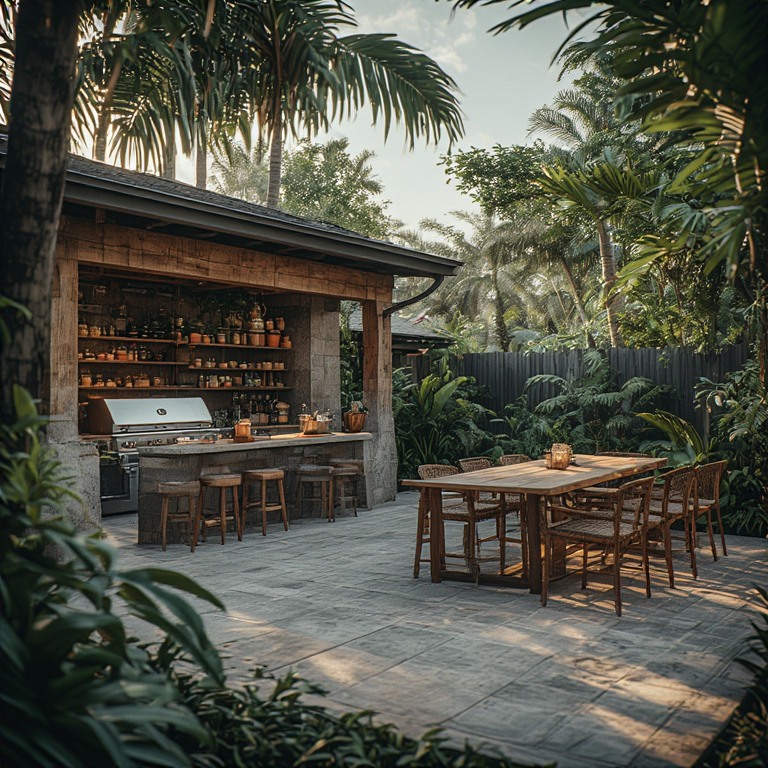
Building an Outdoor Kitchen & Entertaining Area involves several steps to ensure it’s functional, durable, and enjoyable. Here’s a comprehensive guide to get you started:
1. Define Your Purpose & Layout
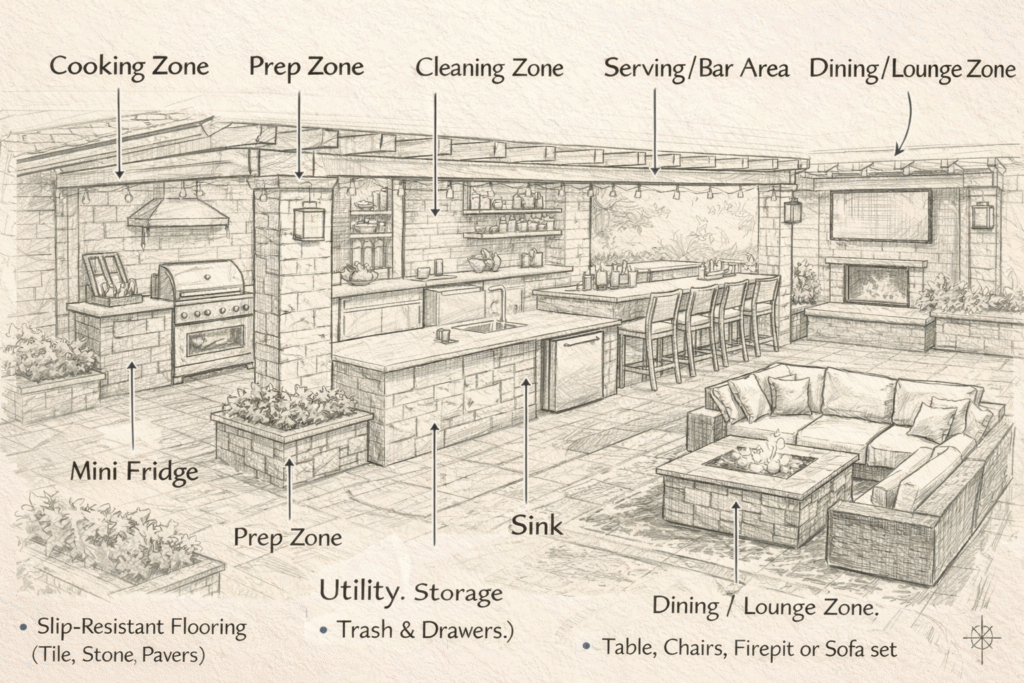
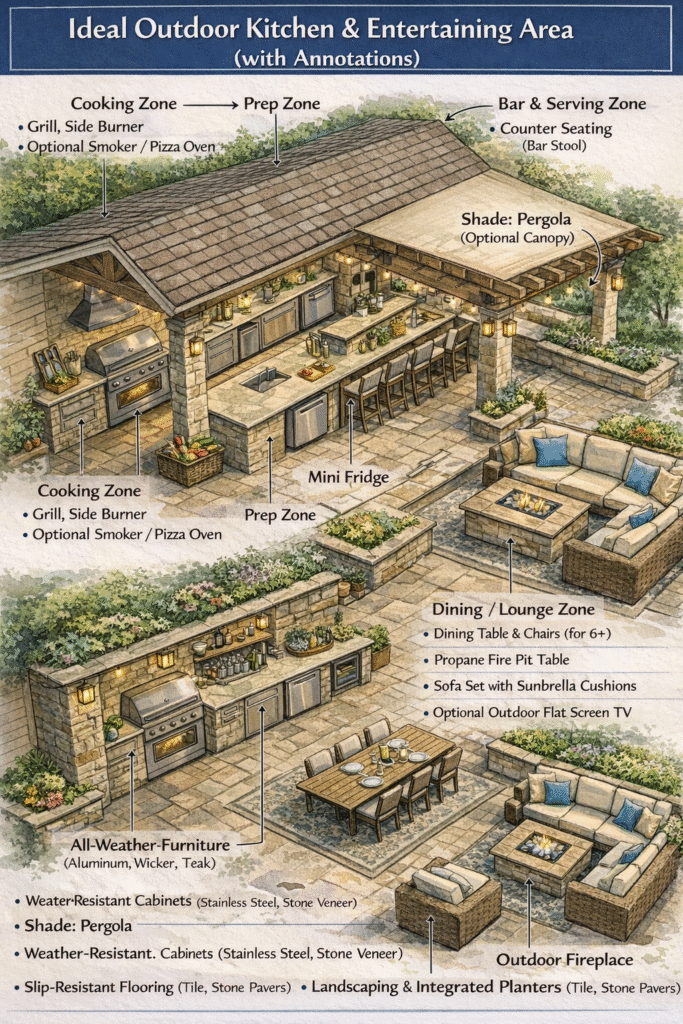
When designing your outdoor kitchen and entertainment area, it’s essential to thoughtfully consider the activities you plan to incorporate. Begin by envisioning the grilling experience, selecting a high-quality grill that not only meets your cooking needs but also complements the overall aesthetic of the space. For dining, choose a sturdy table and comfortable chairs that invite guests to linger over meals, making sure there’s ample space for serving dishes and decor. Additionally, create a lounging area with cozy seating options, like outdoor sofas or lounge chairs, where friends and family can relax and enjoy the ambiance. A designated bar service area adds a touch of sophistication, allowing you to mix drinks and serve refreshments easily. By thoughtfully arranging these elements, you can create a cohesive outdoor space that caters to various activities and fosters memorable gatherings. Sketch out the zones:
- Cooking Zone: Grill, side burner, pizza oven
- Prep Zone: Counter space, cutting boards
- Cleaning Zone: Sink, trash storage
- Serving/Bar Area: Counter seating or bar
- Dining/Lounge Zone: Table, chairs, firepit or sofa set
2. Choose the Right Location
When planning the placement of an outdoor kitchen, convenience is key. Ideally, it should be located close to your indoor kitchen, allowing for easy access to ingredients and utensils while minimizing the effort needed to transport food and supplies. In addition to proximity, proper ventilation is essential to ensure a comfortable cooking environment and to prevent smoke and odors from infiltrating your home. It’s important to position the outdoor kitchen away from direct contact with wood siding unless protective measures are in place to prevent damage. Furthermore, situating the kitchen near existing water, gas, and electrical lines will streamline the installation process and enhance functionality. By considering these factors, you can create an efficient and enjoyable outdoor cooking space that complements your home’s design and meets your culinary needs.
3. Plan Utilities
When planning your outdoor kitchen and entertainment area, it’s essential to carefully consider the utilities that will enhance both functionality and enjoyment. Start by installing a gas line to accommodate your grill, burners, and heaters, ensuring you can cook and entertain comfortably year-round. Electricity is equally important; plan for lighting that creates the right atmosphere, including ambient options like string lights, task lighting for under-cabinet areas, and safety lighting along pathways. Additionally, ensure proper water drainage for a sink or wet bar, which will facilitate easy cleanup and enhance your outdoor cooking experience. A thoughtful utility plan will transform your outdoor space into a welcoming oasis.
4. Select Durable Materials
When designing an outdoor space, selecting durable materials is essential for longevity and aesthetic appeal. For cabinets, consider options like stainless steel, marine-grade polymer, or stone veneer, which can withstand the elements while maintaining their appearance. The choice of countertops is equally important; granite, concrete, and porcelain are excellent choices, particularly those that are UV and stain resistant, ensuring they remain beautiful over time. Flooring should prioritize safety as well as durability; slip-resistant tile, concrete, and stone pavers are ideal for preventing accidents, especially in wet conditions. If the area is covered, options such as a pergola, pavilion, or retractable canopy can provide adequate protection while enhancing the overall design.
5. Choose Appliances
When designing an outdoor kitchen and entertainment area, selecting the right appliances is crucial for both functionality and enjoyment. A versatile grill—whether gas, charcoal, or pellet—serves as the centerpiece for outdoor cooking, allowing for a variety of culinary experiences. Complementing the grill, a side burner or wok station can enhance cooking options for sautéing or stir-frying. An outdoor-rated fridge or ice maker ensures that drinks are always chilled and ingredients are readily accessible. Incorporating a sink with either a hose or plumbing adds convenience for food preparation and cleanup. For those with a passion for unique flavors, a pizza oven or smoker can elevate outdoor dining experiences. Additionally, warming drawers or a beverage cooler can keep food warm or drinks refreshingly cold, creating an inviting atmosphere for gatherings. Together, these appliances create a well-equipped outdoor kitchen that caters to both casual get-togethers and elaborate entertaining, making it an ideal space for friends and family to enjoy.
6. Furnish the Space
To create an inviting outdoor space, it is essential to furnish it with weather-resistant furniture that combines both style and durability. Options such as aluminum, teak, and wicker with Sunbrella cushions are ideal, as they can withstand the elements while providing comfort. Incorporating built-in seating or benches can maximize the available space and offer a cozy spot for relaxation. A dining table or bar-height stools can enhance the social experience, making it perfect for gatherings with family and friends. To elevate the ambiance, consider adding a fire pit or fireplace, which not only provides warmth but also serves as a focal point for evening conversations under the stars. By thoughtfully selecting and arranging these elements, you can transform your outdoor area into a functional and aesthetically pleasing retreat.
7. Add Finishing Touches
To truly elevate your outdoor kitchen and entertainment area, consider adding thoughtful finishing touches that enhance both functionality and ambiance. Start by incorporating planters or herb gardens, which not only beautify the space but also provide fresh ingredients for your culinary endeavors. Enhance your outdoor experience with outdoor speakers or an entertainment system, creating the perfect atmosphere for gatherings or relaxation. Shade solutions, such as umbrellas, pergolas, or retractable awnings, can provide relief from the sun while adding architectural interest to your space. Additionally, ensure you have adequate storage for utensils, grill covers, and propane tanks, keeping your outdoor area organized and clutter-free.
Conclusion
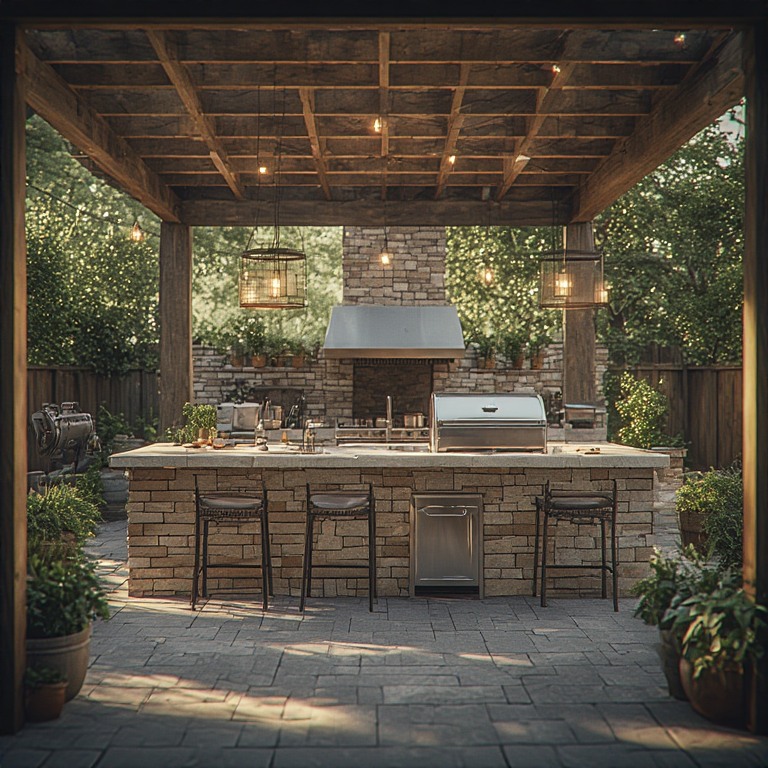
In conclusion, creating an outdoor kitchen and entertaining area is a rewarding endeavor that requires careful planning and execution. By following the comprehensive steps outlined in this guide, you can design a space that not only enhances your outdoor living experience but also adds value to your property. From selecting durable materials to ensuring proper layout and functionality, each element plays a crucial role in achieving a seamless integration of comfort and style. As you embark on this project, remember that the ultimate goal is to foster memorable gatherings with family and friends, making your outdoor kitchen a central hub for enjoyment and connection for years to come.