

When designing or renovating bathrooms and kitchens, the details can significantly impact both functionality and aesthetics. Here’s a breakdown of what constitutes good versus bad details in these spaces:
Good Bathroom/Kitchen Details
1. Quality Materials
– Good: Durable materials like quartz or granite countertops, porcelain tiles, and stainless steel fixtures that stand up to moisture and wear.
– Bad: Low-quality laminate countertops or vinyl flooring that may peel or degrade over time.
2. Functional Layout
– Good: An efficient layout that maximizes space, allowing for easy movement, accessibility, and a logical workflow (e.g., the kitchen work triangle).
– *Bad: Poorly planned layouts that create bottlenecks or make everyday tasks cumbersome, such as placing the refrigerator too far from the prep area.
3. Adequate Lighting
– Good: Layered lighting that includes ambient, task, and accent lighting, providing illumination for different activities (e.g., bright light for cooking and softer light for dining).
– Bad: Insufficient or harsh lighting that creates shadows or makes it difficult to see, especially in the kitchen.
4. Storage Solutions
– Good: Ample, clever storage options such as pull-out cabinets, lazy Susans, and built-in shelving that keep the space organized and clutter-free.
– Bad: Limited or poorly placed cabinetry that leads to clutter and makes it hard to find items.
5. Ventilation
– Good: Proper ventilation systems (like range hoods in kitchens and exhaust fans in bathrooms) that reduce moisture and odors, improving air quality.
– Bad:: Lack of ventilation, leading to mold growth in bathrooms or lingering cooking smells in kitchens.
6. Attention to Detail in Finishes
–Good: Cohesive design elements such as matching hardware, consistent color schemes, and carefully chosen fixtures that enhance the overall look.
– Bad: Mismatched styles, erratic color choices, or poorly installed fixtures that detract from the space’s visual appeal.
7. Accessibility
– Good: Features like grab bars in bathrooms, pull-out shelves in kitchens, and wide doorways for wheelchair access.
– Bad: Stair steps or narrow passageways that impede access and usability for individuals with mobility challenges.
8. Water Efficiency
– Good: Installation of low-flow faucets, showerheads, and toilets that save water without sacrificing performance.
– Bad: Outdated fixtures that consume excessive water, resulting in higher utility bills and environmental impact.
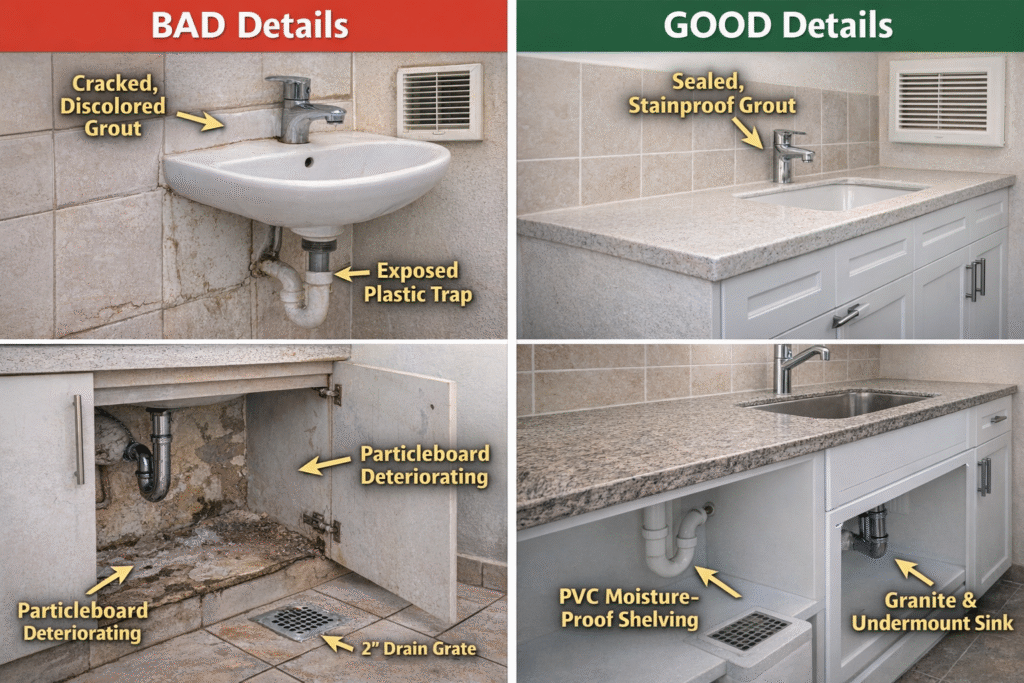
Bad Bathroom/Kitchen Details
1. Inconsistent Design
– Mixing styles or themes (e.g., a rustic sink with modern cabinetry) without a clear plan can create a disjointed look.
2. Poorly Executed Renovations
– Visible gaps, uneven surfaces, or misaligned tiles can make a space feel cheap and poorly constructed.
3. Overly Complex Features
– Features that are difficult to use, such as overly complicated faucet controls or complex cabinetry, can frustrate users.
4. Inadequate Counter Space
– Insufficient countertop space in kitchens can hinder meal prep and cooking, while a lack of counter space in bathrooms can complicate daily routines.
5. Forgettable Fixtures
– Outdated or unattractive fixtures that don’t match the overall design can age a space significantly.
6. Neglecting Natural Light:
– Poor window placement or heavy drapery can make kitchens and bathrooms feel dark and uninviting.
7. Cluttered Surfaces
– Overloaded counters or lack of organization can create an unappealing and chaotic atmosphere.
8. Ignoring Trends or User Preferences
– Failing to consider modern trends, such as open shelving or smart appliances, can make a space feel outdated.
Conclusion
Good details in bathrooms and kitchens significantly enhance both functionality and aesthetic appeal, while bad details can lead to frustration and an uninviting atmosphere. Careful consideration of materials, layout, lighting, and storage solutions will yield a more enjoyable and efficient space. Always think about the long-term use and maintenance of design choices to create a functional and welcoming environment.
LATEST ARTICLES
-

10 Ideas designed for a Caribbean Tropical Home
These ideas are designed for a Caribbean tropical home, where the emphasis is on natural materials, breezy spaces, vibrant foliage, and seasonal changes that fit the local climate rather than four distinct temperate seasons. 1. Tropical Spring Refresh To create a refreshing ambiance in a Caribbean tropical home, the concept of a “Tropical Spring Refresh”…
-

How to Make Your Own Bubble Diagram
A bubble diagram in architecture is a quick, loose way of planning how spaces relate to each other before you start drawing walls, doors, or exact dimensions. Think of it as the logic underneath the floor plan. Instead of drawing a bedroom as a precise 12′ × 14′ rectangle, you draw a bubble labelled Bedroom.…
-
Remedies for Slopes, Corners & Sharp Angles
In the realms of architecture and feng shui, a significant overlap exists in their fundamental principles, despite the different terminologies used. Feng shui emphasizes the concept of “chi,” which refers to the vital energy that flows through spaces, affecting the well-being of individuals. Architects, on the other hand, focus on aspects such as circulation, sight…