
Finding your personal design style is like uncovering the story your home wants to tell about you. Your goal isn’t to copy a trend, but to discover the aesthetic, mood, and energy that feels most like you — what makes you feel calm, inspired, and grounded. This process involves introspection, allowing you to assess what truly brings you joy and comfort in your surroundings. By focusing on what makes you feel calm, inspired, and grounded, you can create an environment that serves as a true extension of yourself.
The journey to defining your personal design style also invites you to explore various influences and inspirations that may shape your vision. This exploration could involve researching different design philosophies, experimenting with color palettes, and considering various textures and materials that speak to you. It may be beneficial to gather images, samples, or even create mood boards that encapsulate the feelings you wish to evoke in your space. As you curate these elements, you’ll begin to see a cohesive narrative emerge—one that harmoniously blends your past experiences with your current aspirations. Ultimately, the goal is to cultivate a home that not only reflects your personal taste but also nurtures your well-being, creating a sanctuary where you can thrive and feel authentically yourself.
Here’s a practical and intuitive guide to help you determine your design style for your house (especially within a Caribbean context). in a step by step manner.
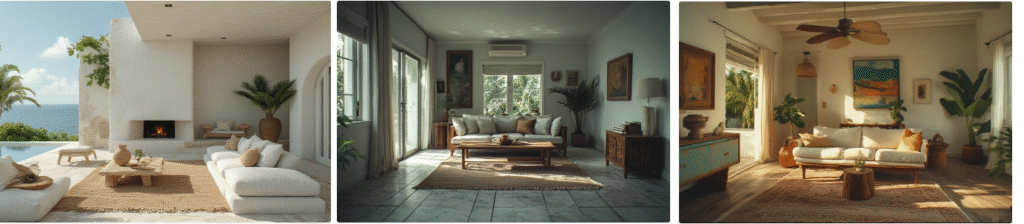
1. Start With How You Want to Feel, Not Just How It Looks
Before talking about furniture or colors, ask yourself: “How do I want to feel when I walk into my home?”
For example:
- Relaxed and breezy → Tropical / Coastal / Caribbean Contemporary
- Warm and grounded → Rustic / Colonial / Bohemian Tropical
- Elegant and balanced → Modern Caribbean / Mediterranean Fusion
- Creative and soulful → Boho / Eclectic / Artistic Caribbean
- Natural and calm → Organic Minimalist / Sustainable Tropical
💡 Tip: Write down three words that describe your ideal home vibe — e.g., light, welcoming, inspired — and keep them as your design compass.
2. Identify Your Color and Material Preferences
Think about what colors and textures naturally attract you:
- Warm earthy tones (terracotta, ochre, browns): Colonial, Rustic, Boho
- Cool airy tones (seafoam, white, aqua): Coastal, Modern Tropical
- Deep lush tones (greens, wood, stone): Eco-Caribbean, Nature-inspired
- Vivid, cultural tones (turquoise, magenta, mustard): Bohemian, Artistic, Island Vernacular
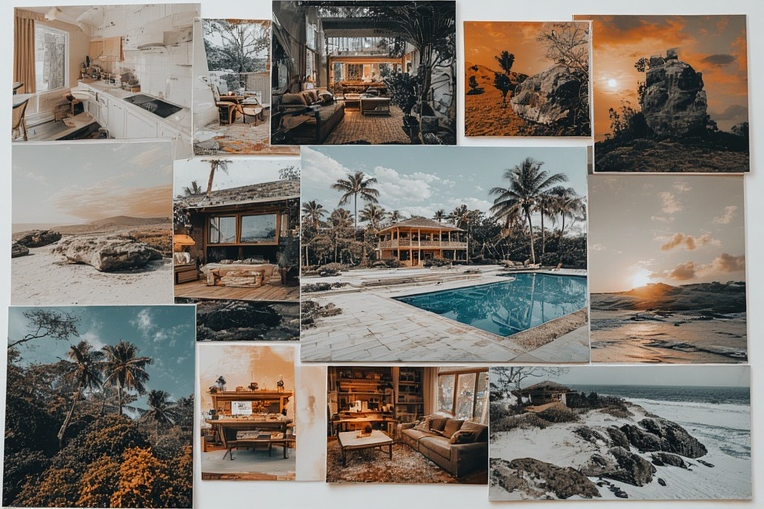
💡 Exercise: Create a mood board (Pinterest, Canva, or a physical collage).
Collect 15–20 images — not just houses, but fabrics, beaches, furniture, art — that make you feel at home. You’ll see a theme appear.
3. Notice the Spaces You Love (and Why)
Think about:
- Hotels, cafés, or Airbnbs where you’ve felt relaxed
- Homes of friends or family that feel “right” to you
- Even films or magazines that draw you in
Ask yourself: What elements keep repeating — light colors? arched windows? natural textures? plants? These repeating patterns reveal your authentic design language.
4. Consider Your Lifestyle
Your daily rhythms should shape your home’s flow.
| Lifestyle | Matching Style |
|---|---|
| Outdoor, social, relaxed | Caribbean Contemporary / Coastal Tropical |
| Artistic, reflective, expressive | Bohemian / Eclectic |
| Organized, peaceful, balanced | Modern Minimalist / Zen Tropical |
| Family-oriented, traditional | Colonial Caribbean / Plantation Revival |
| Eco-conscious, simple living | Sustainable Tropical / Bamboo Architecture |
💡 If you like verandas, greenery, and sea breeze — your home likely leans toward “open, tropical, and breathable.”
5. Align With Your Environment (and Chi Flow)
In the Caribbean, nature itself is the designer.
So, your style should also respond to:
- The direction your home faces (sun, breeze)
- The landform (flat land, hillside, near sea, forested area)
- The energy of your space (lively neighborhood or quiet retreat)
Feng Shui and tropical architecture both agree:
A design should flow with the environment, not fight it.
💡 Example:
If your home faces the sea breeze, a Coastal-Bohemian or Modern Caribbean style with open-plan airflow would feel natural.
6. Mix — Don’t Match
Many Caribbean homes naturally blend styles. You can create your own signature mix — e.g.:
- Modern Caribbean + Bohemian Tropical (clean lines + handmade charm)
- Colonial + Coastal Rustic (heritage + sea breeze)
- Eco-Minimalist + Caribbean Vernacular (simplicity + local materials)
💡 Think of your design style as a recipe — unique proportions that reflect you.
7. Evaluate With These 5 Core Questions
Ask yourself:
- Do I feel comfortable in this space?
- Can I breathe easily here (visually and physically)?
- Does it reflect my cultural and personal story?
- Would I still love this 10 years from now?
- Is it in harmony with nature and light around it?
If you answer “yes” to most — you’ve found your style. 🌞
8. Quick Personality–Style Matching Guide
| Personality Type | Suggested Design Style |
|---|---|
| Calm, peaceful, nature-lover | Tropical Minimalist / Eco-Caribbean |
| Creative, expressive, spiritual | Bohemian Caribbean / Artistic Coastal |
| Traditional, family-oriented | Colonial Caribbean / Rustic Vernacular |
| Modern, organized, tech-savvy | Contemporary Caribbean / Modern Tropical |
| Free-spirited, traveler, collector | Eclectic Tropical / Boho Fusion |
9. Design Tip for Caribbean Homes
No matter your style, always include:
- Cross-ventilation (flow of air = flow of energy)
- Natural light balance (shade + brightness)
- Connection to nature (plants, outdoor views)
- Local materials (they breathe better in the climate)
That ensures any style — modern, boho, or rustic — feels authentically Caribbean.
In conclusion, discovering your personal design style is a transformative journey that goes beyond mere aesthetics; it is about crafting a space that authentically reflects who you are. By engaging in thoughtful introspection and considering the elements that bring you joy and tranquility, you can curate an environment that not only resonates with your identity but also fosters a sense of peace and inspiration. As you explore the steps outlined in our guide and take the quiz provided, remember that this process is uniquely yours. Embrace the opportunity to create a home that tells your story, intertwining your individual tastes with the vibrant influences of Caribbean culture. Your ideal design style awaits, ready to be uncovered and celebrated.
MORE ARTICLES
-

10 Ideas designed for a Caribbean Tropical Home
These ideas are designed for a Caribbean tropical home, where the emphasis is on natural materials, breezy spaces, vibrant foliage, and seasonal changes that fit the local climate rather than four distinct temperate seasons. 1. Tropical Spring Refresh To create a refreshing ambiance in a Caribbean tropical home, the concept of a “Tropical Spring Refresh”…
-

How to Make Your Own Bubble Diagram
A bubble diagram in architecture is a quick, loose way of planning how spaces relate to each other before you start drawing walls, doors, or exact dimensions. Think of it as the logic underneath the floor plan. Instead of drawing a bedroom as a precise 12′ × 14′ rectangle, you draw a bubble labelled Bedroom.…
-
Remedies for Slopes, Corners & Sharp Angles
In the realms of architecture and feng shui, a significant overlap exists in their fundamental principles, despite the different terminologies used. Feng shui emphasizes the concept of “chi,” which refers to the vital energy that flows through spaces, affecting the well-being of individuals. Architects, on the other hand, focus on aspects such as circulation, sight…