

When designing a bathroom that’s built to last, your material choices matter more than aesthetics. Bathrooms are high-moisture, high-traffic spaces, so pick materials that resist water, stains, wear, and are easy to clean.
Here’s a straightforward guide to durable, moisture-resistant materials for every main surface in a bathroom:
1. Floors — Wear + Water Resistance
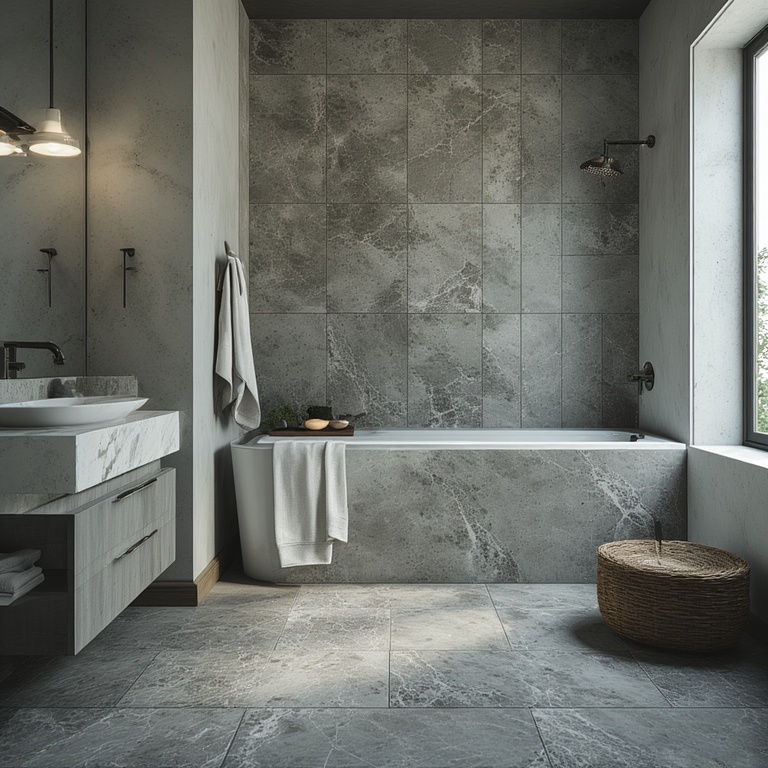
Best Options:
- Porcelain Tile – Hard, dense, waterproof, and scratch-resistant; excellent longevity.
- Natural Stone (e.g., slate, granite) – Durable and moisture-resistant when properly sealed; great for textured looks.
- Luxury Vinyl Plank (LVP) / Tile (LVT) – Modern versions are waterproof and resilient with less coldness underfoot.
- Concrete (sealed) – Ultra-tough and customizable; sealing is critical to avoid staining.
👉 Avoid: Hardwood (unless engineered and sealed extremely well—still risky), cheap laminate.
2. Walls + Shower Surrounds — Water Protection First
Top Picks:
- Porcelain or Ceramic Tile – Classic, waterproof, stain-resistant, and available in many finishes.
- Large Format Porcelain Slabs – Fewer grout lines = less maintenance + more water integrity.
- Acrylic or Solid-Surface Wall Panels – Seamless look, easy cleaning, no grout to fail.
- Natural Stone Tile (sealed) – Beautiful and lasting if sealed/maintained.
👉 Key: Use waterproof backer board behind tile (e.g., cement board, foam board).
3. Countertops — Hard, Non-Porous, Tough
Good Choices:
- Engineered Quartz – Non-porous, stain-resistant, low-maintenance; excellent durability.
- Granite – Very hard and long-wearing; needs occasional sealing.
- Solid-Surface (e.g., Corian) – Seamless and easy to repair scratches.
- Porcelain Slab Countertop – Extremely scratch, heat, and water resistant.
👉 Avoid: Marble in high-use bathrooms (porous, prone to etching).
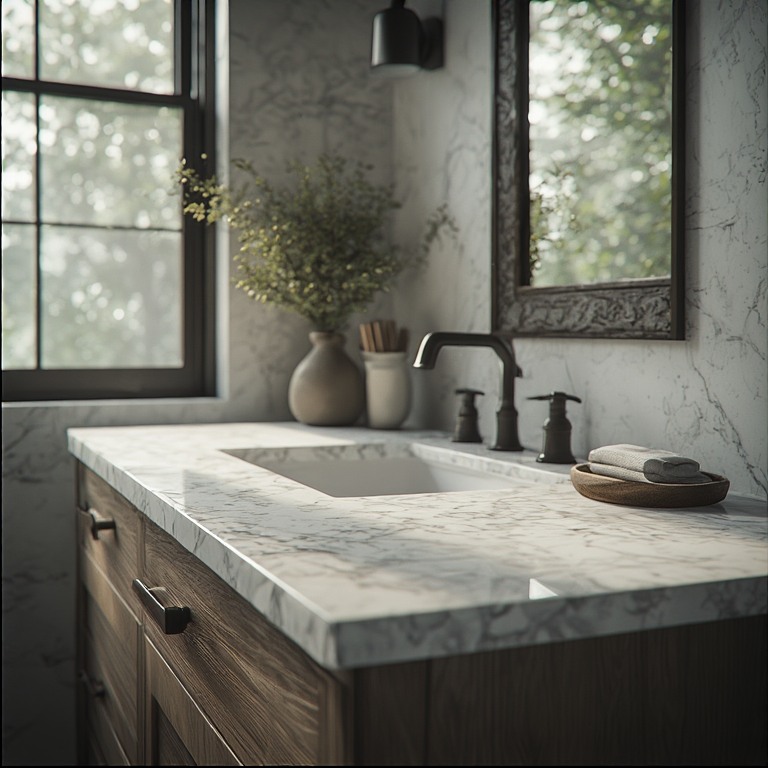
4. Vanities & Cabinets — Moisture-Ready Construction
Best Materials:
- Marine-Grade Plywood – Far superior to MDF where moisture is present.
- Moisture-Resistant MDF – Okay if properly sealed and painted.
- PVC/Waterproof Composite Cabinets – Excellent for wet climates or minimal maintenance.
- Solid Wood with Water-Resistant Finish – Durable and timeless when sealed expertly.
👉 For doors/drawers: avoid raw particle board—it delaminates fast.
5. Shower Doors & Hardware
Durable Picks:
- Tempered Glass (clear or low-iron) – Lasts decades and resists scratching.
- Stainless Steel or Brass Hardware – Resists corrosion far better than plated metals.
- Anodized Aluminum – Affordable and corrosion-tough.
👉 Skip cheap plated metals—they peel and rust.
6. Fixtures (Faucets, Showerheads, Drains)
- Solid Brass Bodies – The gold standard for longevity.
- Stainless Steel Finishes – Great resistance to rust and wear.
- Ceramic Disc Valves – Far more durable than older rubber washers.
Avoid thin zinc alloys—they wear quickly.
7. Grout & Sealants — The Hidden Protectors
- Epoxy Grout – Strong, stain-resistant, and moisture-sealed; best for wet areas.
- Silicone Caulk (100% Silicone) – Use around tubs, countertops, and corners; expands with movement.
- Penetrating Sealers (for stone) – Essential if you use any natural stone.
A Quick Cheat Sheet
| Area | Best Material | Why |
|---|---|---|
| Floor | Porcelain Tile / Sealed Stone | Waterproof, scratch-resistant |
| Shower Walls | Porcelain / Large Slabs / Panels | Seamless or tight grout = minimal leaks |
| Countertop | Quartz / Granite / Solid-Surface | Non-porous + durable |
| Cabinets | Marine Plywood / PVC Composite | Moisture-ready core |
| Hardware | Stainless / Brass | Corrosion-resistant |
| Grout/Sealant | Epoxy / Silicone | Stops water intrusion |
Durable Design Principles
✅ Minimize joints & seams → fewer places for water to penetrate
✅ Choose non-porous surfaces when possible → easier cleaning + less mold
✅ Seal everything well → especially natural stone
✅ Match finishes to humidity → hot showers + poor ventilation demands better materials
Prioritized Shopping List
Below is a prioritized shopping list for a tropical bathroom (high humidity, occasional salt air, lots of condensation), split into low-income and middle-income tiers. The priority order is deliberate: if you spend well on the early items, the bathroom lasts longer even if finishes are modest.
Priority 1: Moisture control (non-negotiable in the tropics)
Low-income
- Extractor fan (or wall fan) vented outdoors
- Window louvers/jalousies + insect screen (if no fan)
- Mildew-resistant 100% silicone for corners/joints (not acrylic caulk)
Middle-income
- Quality extractor fan with timer or humidity sensor
- Backdraft damper + proper ducting (short, smooth duct run)
- Dehumidifier-ready outlet (optional, but useful in rainy season)
Why this matters: bathrooms fail from trapped humidity long before tiles “wear out.” Exhaust fans are specifically recommended to combat condensation/mold issues.
Priority 2: Waterproofing system (this is what stops hidden rot)
Low-income
- Liquid waterproofing membrane for shower walls + wet zone floor
- Cement board (or approved foam board if affordable) behind tile
- Preformed corner bands / waterproof tape (if available)
Middle-income
- Full shower waterproofing kit (membrane + tape + corners)
- Shower niche preformed waterproof box (optional but reduces leak risk)
- Floor “wet room” waterproofing (even if you’re not doing a wet room)
Priority 3: Surfaces that survive water + wear
Floors
Best value in both tiers: Porcelain tile (low water absorption; more “impervious” than typical ceramic). Tiles classed as porcelain are defined by very low water absorption (≤0.5%).
- Low-income floor choice: standard matte porcelain (smaller format is often cheaper)
- Middle-income floor choice: slip-resistant / textured porcelain or large-format porcelain
Avoid glossy floors in tropical bathrooms (slip hazard).
Shower walls / wet walls
- Low-income: ceramic wall tile + good waterproofing + good grout/sealant habits
- Middle-income: porcelain wall tile or large-format porcelain (fewer grout lines)
Priority 4: Grout and sealants (the “maintenance multiplier”)
Low-income
- High-quality cement grout + grout sealer (schedule reseal)
- 100% silicone at all changes of plane (wall-to-wall, wall-to-floor, around fixtures)
Middle-income
- Epoxy grout in shower/wet zones (non-porous, stain/moisture resistant)
- Cement grout is fine outside the shower if budget is tight.
If you can only upgrade one thing in middle-income tier: upgrade the shower grout to epoxy.
Priority 5: Vanity/cabinet materials (tropics punish cheap board)
Low-income
- Moisture-resistant MDF only if fully sealed on all edges + good ventilation
- Better: exterior-grade plywood carcass with a good paint/laminate finish
Middle-income
- Marine-grade or exterior-grade plywood vanity carcass
- PVC/composite vanity (excellent in humid/salt-prone areas if you can find it)
Plywood (especially marine/exterior grades) generally handles bathroom moisture better than MDF in high-moisture exposure.
Priority 6: Fixtures + hardware (corrosion is the tropical killer)
Low-income
- Simple, proven faucets (avoid super-cheap plated mystery metal)
- Stainless fasteners where possible (hinges, screws)
Middle-income
- Brass-body faucet + quality cartridge
- Stainless steel hardware, ideally 316 if you’re near the coast (best corrosion resistance)
Quick “buy this first” bundles
Low-income “Minimum Durable Tropical Bathroom” bundle
- Extractor fan (or strong ventilation plan)
- Waterproofing membrane + cement board
- Matte porcelain floor tile
- Ceramic/porcelain wall tile in wet areas
- Cement grout + grout sealer
- 100% silicone
- Moisture-resistant vanity material (sealed)
- Basic corrosion-resistant hardware
Middle-income “Long-life, Low-maintenance” bundle
- Humidity-sensing or timed extractor fan
- Full waterproofing system (membrane + tape + corners)
- Porcelain tile (floor + shower walls), fewer grout lines
- Epoxy grout in wet zones
- Marine/exterior plywood or PVC vanity
- Brass-body fixtures + corrosion-resistant hardware
Two “don’t waste money” tips (big impact)
- Spend less on decorative tile, spend more on waterproofing + ventilation + grout.
- In the tropics, a “pretty” bathroom with weak ventilation will mold and swell—fast.