

Courtyards aren’t just decorative—they’re one of the oldest and most intelligent architectural tools ever used. If you’re serious about building something that works with the environment instead of fighting it, courtyards are high-value design moves.
Why Courtyards Matter (Beyond Aesthetics)
Courtyards have been a fundamental architectural feature across various cultures, serving as practical solutions to common environmental challenges. From the homes of ancient Romans to the residences found in the Caribbean and the Middle East, these open spaces provide essential benefits such as heat management, airflow, privacy, and natural light. In the context of climatelike in Trinidad and Tobago, where high humidity and intense sunlight are prevalent, the significance of courtyards becomes even more pronounced. They function as natural climate control systems, allowing for effective ventilation and cooling without the need for mechanical solutions. Ultimately, courtyards enhance comfort while harmonizing with the natural environment.
How Courtyards Enhance Natural Light
Courtyards significantly enhance natural light in residential spaces by allowing light to enter from the center of the home rather than solely from the perimeter. In traditional houses that rely on edge windows, this often results in dark middle spaces and uneven lighting throughout. However, a courtyard changes this dynamic by enabling light to penetrate deep into the building. As a result, rooms benefit from two-sided lighting, receiving illumination from both the outside and the courtyard. This setup provides soft, indirect light that reduces harsh glare, leading to less dependence on artificial lighting. Ultimately, this design fosters better mood and visual comfort while maximizing usable interior space and eliminating “dead zones.”
How Courtyards Improve Ventilation (This is the real power)
Courtyards play a crucial role in enhancing ventilation within a building, acting as a powerful mechanism for promoting air circulation. They utilize two primary methods: cross ventilation and the stack effect. In cross ventilation, air enters from one side of the house and flows through various rooms before exiting into the courtyard, or vice versa. This movement of air helps maintain a fresh and comfortable indoor environment. Meanwhile, the stack effect, often described as a natural chimney, allows hot air to rise into the courtyard and escape upward, simultaneously pulling cooler air through the house. Essentially, the courtyard functions as a breathing lung for the building, ensuring a continuous exchange of air that benefits the overall climate and comfort of the space.
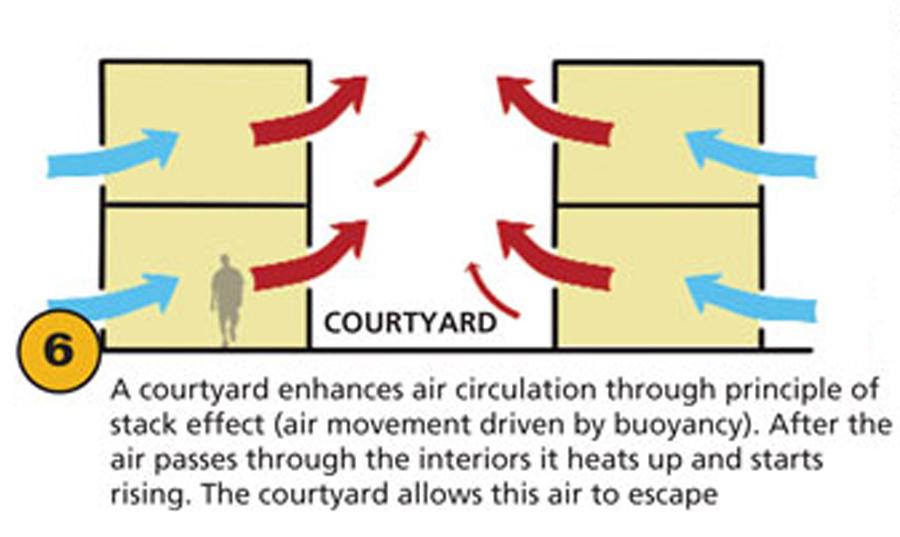
Thermal Comfort (Cooling Without AC)
Thermal comfort is essential for maintaining a pleasant indoor environment, and achieving this without relying on air conditioning is not only possible but can also be highly effective. Well-designed courtyards play a crucial role in naturally lowering indoor temperatures. For instance, shaded walls significantly reduce heat gain, while the presence of plants enhances evaporative cooling, contributing to a more comfortable atmosphere. Additionally, incorporating water features, even if they are small, can help cool the surrounding air by promoting evaporation. At night, walls can release stored heat into the open sky, further aiding in temperature regulation. In tropical climates, these strategies are not merely optional; they represent smart, sustainable design solutions that enhance both comfort and energy efficiency.
Privacy Without Isolation
A courtyard can transform a home by offering privacy without isolation, an aspect that is often underrated. By incorporating a courtyard, homeowners can open up their living spaces internally while maintaining a closed-off exterior. This design allows for the installation of big windows, which creates an open and airy feeling inside the home, all while ensuring that the living area remains shielded from street view and outside distractions. This unique balance achieves premium living conditions without the necessity of a massive lot. The courtyard serves as a serene retreat, enhancing the overall quality of life and enriching the home’s atmosphere.
Spatial & Emotional Impact
Courtyards serve as a vital center of gravity in the home, offering a unique spatial and emotional impact that transforms the living environment. These serene spaces provide a quiet, reflective atmosphere that aligns seamlessly with a “stillness” mindset, inviting moments of contemplation and tranquility. By fostering natural transitions between indoor and outdoor areas, courtyards create an organic flow that enhances the overall experience of the home. In this way, architecture transcends its functional role, evolving into something profoundly experiential. The incorporation of a courtyard enriches daily life, allowing residents to connect with nature and find solace within their own sanctuary.
Where People Go Wrong (Important)
Courtyards can be a wonderful feature in architectural design, but they only succeed when carefully crafted. Many people go wrong by simply adding a courtyard without considering the essential elements that make it functional and enjoyable. One common mistake is designing a courtyard that is too small, which can turn it into a heat trap, making it uncomfortable during warmer months. Additionally, a lack of airflow paths can result in stagnant air, detracting from the courtyard’s intended purpose as a refreshing outdoor space. Exposing the courtyard to harsh sunlight without a shading strategy can further detract from its usability, pushing people away rather than inviting them in. To create an inviting courtyard, it is crucial to approach the design as a cohesive system, ensuring that all elements work harmoniously to provide a comfortable and aesthetically pleasing environment.
Practical Design Tips
When designing a courtyard, several practical tips can significantly enhance its functionality and comfort. First and foremost, consider the orientation of the space; aligning it with prevailing winds can optimize natural ventilation. Additionally, the proportion of the courtyard is crucial—the height-to-width ratio influences both light penetration and airflow, creating a more inviting atmosphere. Incorporating shading elements such as overhangs, louvers, or partial covers will further improve comfort by mitigating direct sunlight. Greenery is not just an aesthetic choice; plants are essential as they enhance the overall environment, contributing to better air quality and tranquility. Finally, ensure that there are opposing windows or doors to establish effective airflow paths, promoting a refreshing breeze throughout the courtyard. These design elements work in harmony to create a functional and enjoyable outdoor space
Conclusion
A courtyard is far more than just a luxury feature; it serves as a vital performance element in architectural design. When utilized effectively, a courtyard enhances various aspects of a building’s environment. It provides better natural light, allowing spaces to feel more open and inviting. Additionally, it promotes improved airflow, contributing to a more comfortable atmosphere inside. The design of a courtyard can also help lower heat levels, making spaces cooler and more pleasant during warm weather. Beyond these benefits, courtyards offer greater privacy, creating intimate outdoor spaces shielded from the hustle and bustle of the outside world. Furthermore, they strengthen spatial design, adding depth and character to the overall layout. Remarkably, all these advantages come without increasing energy costs, making courtyards a smart and sustainable choice in modern architecture.
RELATED ARTICLES
Best Plant Options for Your Courtyard or Inner Garden
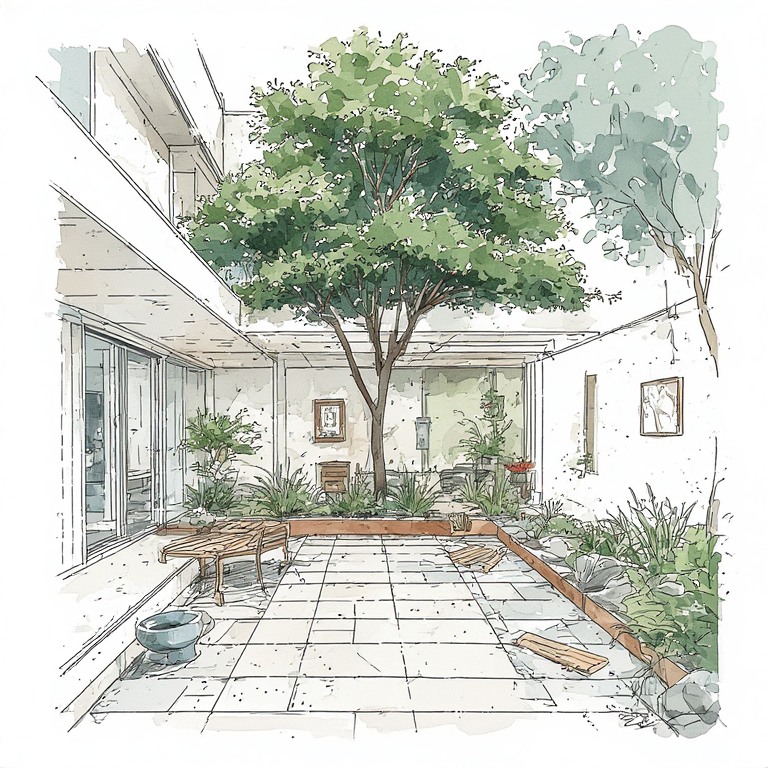
The Caribbean has the best climates on earth for courtyards—and if you choose the right plants, the space will cool itself, filter light, and feel alive without maintenance headaches…
Maintenance Tips for Thriving Gardens
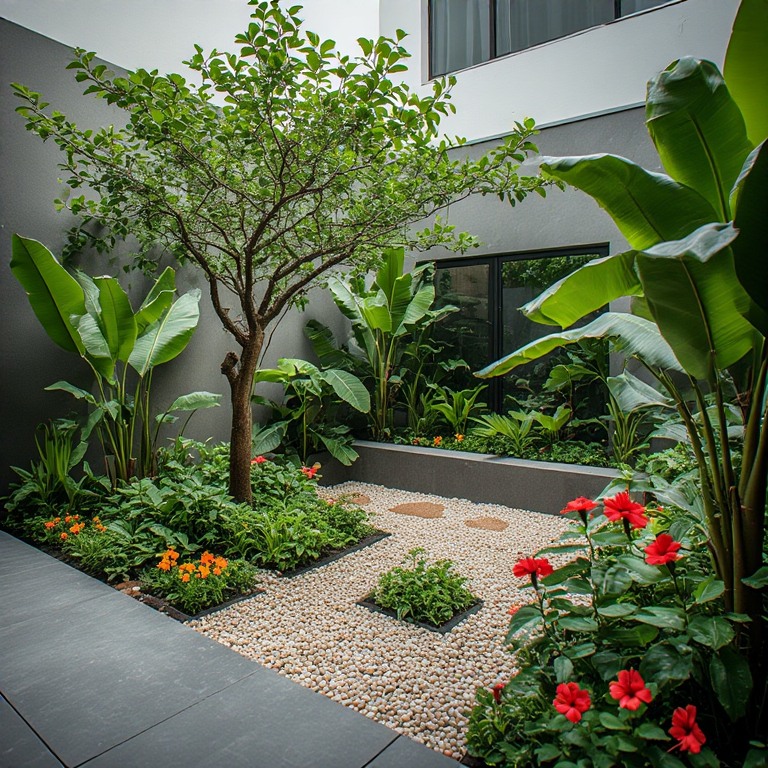
A courtyard garden in the Caribbean will either thrive effortlessly or quietly fall apart—it comes down to a few consistent habits. You don’t need complexity; you need a tight system you actually stick to…
Designing and Orienting Your Courtyard
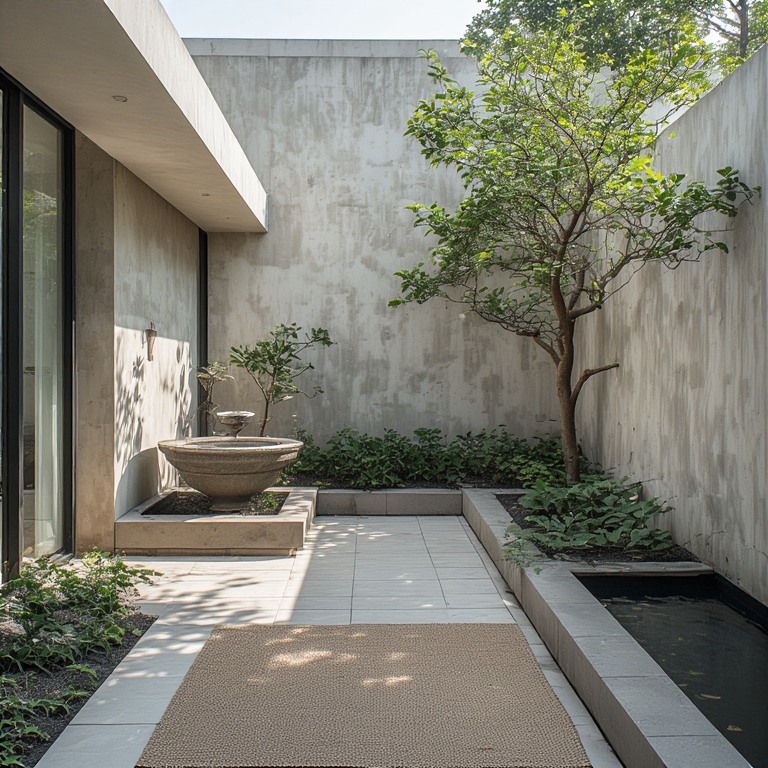
A courtyard is often perceived merely as a source of airflow and natural light, yet its potential extends far beyond these basic functions…
MORE ARTICLES
-
Courtyards in Artchitecture

Courtyards aren’t just decorative—they’re one of the oldest and most intelligent architectural tools ever used. If you’re serious about building something that works with the environment instead of fighting it, courtyards are high-value design moves. Why Courtyards Matter (Beyond Aesthetics) Courtyards have been a fundamental architectural feature across various cultures, serving as practical solutions to…