

Introduction
Landscaping is a vital yet often overlooked component of the home construction process. While many homeowners may think of landscaping as an afterthought, the most effective time to begin this essential work is during the late construction phase, before the house is fully completed. Initiating landscaping at this stage allows for a cohesive integration of the outdoor environment with the architectural design of the home, ensuring that the landscape complements the structure and enhances curb appeal. By strategically timing the landscaping efforts, homeowners can avoid the disruptions and potential damage that can arise from moving heavy equipment or making adjustments after the home is finished.
This article will outline the ideal sequence for implementing landscaping during the late construction phase, encompassing everything from site preparation and soil health to the selection of plant materials and hardscaping elements. By adhering to this recommended timeline, homeowners can create a harmonious outdoor setting that not only elevates the aesthetic value of their property but also promotes sustainability and ease of maintenance in the years to come. Let’s explore how to effectively plan and execute your landscaping project to achieve the best results without compromising the integrity of your new home.
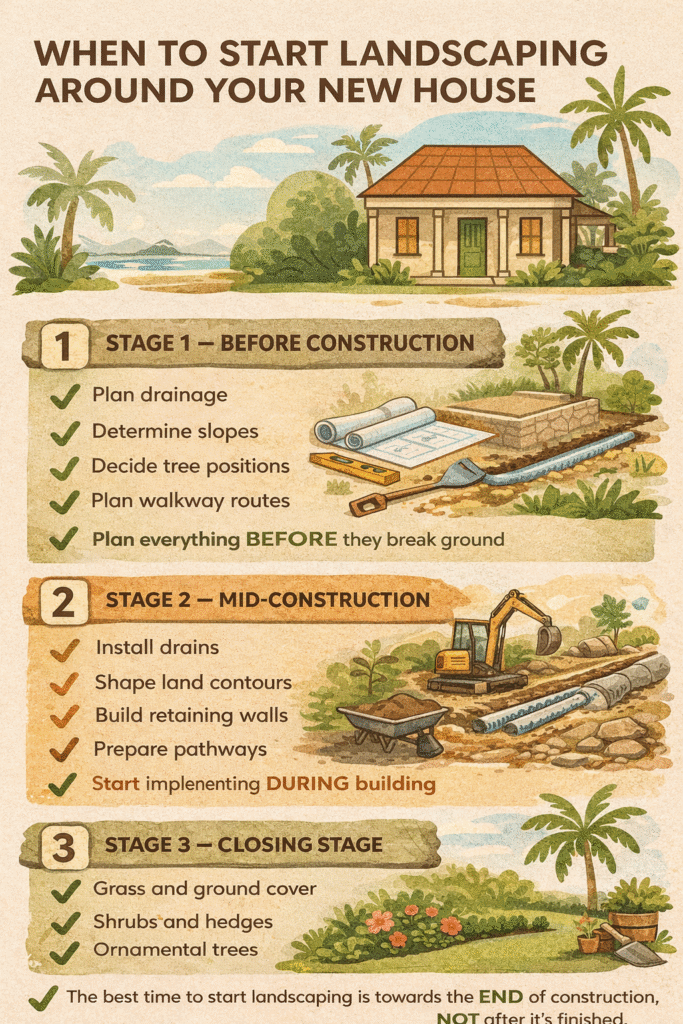
When to start landscaping around your new home
Stage 1 — Before Construction:
Before commencing any construction activities, it is crucial to undertake a comprehensive planning phase that lays the groundwork for a successful project. This initial stage involves meticulous planning of drainage systems to ensure efficient water management throughout the site. Evaluating and determining the appropriate slopes is vital to facilitate proper water runoff and prevent potential flooding or erosion issues. Additionally, positioning trees strategically is essential; not only do they provide aesthetic value, but they also offer shade that can enhance outdoor comfort and reduce energy costs. Carefully planning the routes for walkways will ensure optimal accessibility, guiding foot traffic seamlessly through the landscape while complementing the overall design.
Equally important is the identification of problem areas concerning sun exposure, which can impact both plant growth and the usability of outdoor spaces. By understanding the directions from which sunlight will primarily hit the site, adjustments can be made to maximize shade or sunlight as needed. Furthermore, planning the locations for essential utilities such as septic systems, soakaway pits, and storage tanks is fundamental to maintaining the functionality and sustainability of the property. This phase, focused solely on planning and layout rather than planting, ensures that all critical factors are thoughtfully considered before moving forward with construction, setting the stage for a successful and harmonious development.
Stage 2 — Mid-Construction:
During the mid-construction phase, the focus shifts to critical infrastructure elements that will support the overall functionality and aesthetic appeal of the project. The installation of drains and French drains is paramount in this stage, as these systems are designed to efficiently manage water runoff and prevent potential flooding or erosion. Proper drainage ensures that the site remains stable and that water is directed away from structures and landscaped areas, protecting both the integrity of the construction and the health of future plantings. Additionally, the creation of retaining walls is essential, particularly in areas with varying elevations. These walls not only provide necessary support for soil retention but also contribute to the design by creating visually appealing terraces or garden beds that enhance the landscape.
As the construction progresses, shaping the land contours becomes a significant task, allowing for the establishment of a harmonious relationship between the built environment and the natural landscape. This process involves rough grading the soil to create a level foundation for pathways and verandah access, ensuring that these areas are both functional and accessible. By preparing clear, well-defined pathways, we facilitate movement throughout the space, while also enhancing the overall user experience. Furthermore, clearing designated areas for future planting is a strategic step in the process, as it sets the stage for vibrant landscaping that will thrive in its new environment. This meticulous preparation not only paves the way for subsequent planting but also lays the groundwork for a cohesive and attractive outdoor area that will flourish in the years to come.
Stage 3 — Closing Stage of Construction (BEST TIME TO PLANT)
As the construction phase nears its completion, the closing stage presents an opportune moment for landscaping and planting. This period is particularly favorable for introducing a variety of plants, including grass, ground cover, shrubs, hedges, and ornamental trees. By waiting until this stage, you ensure that your landscape receives the attention it deserves without the risk of damage from ongoing construction activities. Heavy machinery, foot traffic from workers, and the presence of cement dust can severely hinder plant growth and establishment if planting is done prematurely. Therefore, this timing not only allows for a more successful planting outcome but also enhances the overall aesthetic appeal of the property as construction draws to a close.
During this critical phase, careful planning and selection of plant materials can make a significant difference in the long-term success of your landscaping efforts. Grass and ground cover can effectively stabilize soil and prevent erosion, while thoughtfully chosen shrubs and hedges will add structure and privacy to the landscape. Furthermore, ornamental trees can provide shade and visual interest, enhancing the outdoor experience for residents and visitors alike. By leveraging the closing stage of construction as the ideal time to implement these landscaping elements, property owners can create a cohesive and inviting environment that complements the new structure while minimizing the potential for damage from construction-related activities. Proper execution during this phase will result in a vibrant landscape that thrives for years to come.
Final Rule of Thumb
The Final Rule of Thumb when it comes to landscaping and planting in construction projects is to commence the actual planting phase only after heavy construction activities are approximately 90% complete. This guideline is crucial for ensuring the health and vitality of the plants, as premature planting can expose them to adverse conditions that may arise during the final stages of construction. Heavy machinery, ongoing site adjustments, and the disturbance of soil can all compromise the establishment of plant life. By waiting until most of the heavy construction work is finished, you are allowing for a more stable environment that promotes optimal growth conditions for the plants.
Moreover, this approach not only safeguards the plants but also enhances the overall efficiency of the project. By postponing planting until the construction phase is nearly complete, project managers can effectively allocate resources and minimize potential disruptions. This strategic timing allows for a seamless integration of landscaping into the completed site, ensuring that the visual appeal and ecological benefits of the plants are maximized. Ultimately, adhering to this rule of thumb contributes to a more sustainable and aesthetically pleasing environment, benefiting both the project and its future occupants.
Conclusion
In conclusion, timing is crucial when it comes to landscaping, and the late construction phase presents the optimal opportunity to enhance your property. By initiating landscaping efforts before the home is fully completed, homeowners can ensure a seamless integration of outdoor spaces with the overall design of the property. This strategic approach not only allows for the careful planning of plant selection and hardscape features but also minimizes the risk of damage to newly installed elements during the final construction activities. By following the ideal sequence outlined in the discussion, homeowners can create a cohesive and inviting landscape that complements their newly built home, ultimately increasing both aesthetic appeal and property value.
Should you find this article insightful and wish to delve deeper into the topic of landscaping costs and the common misconceptions surrounding landscaping within Caribbean communities, please follow the link below for further information.