

A French drain is a gravel-filled trench with a perforated pipe that redirects water away from a building, slope, or yard.
It’s one of the simplest and most effective ways to deal with heavy rainfall, sloping land, waterlogged soil, and foundation protection—all very common in the Caribbean.
Below is a clear, practical breakdown tailored to Caribbean terrains.
What Is a French Drain?
A French drain is essentially:
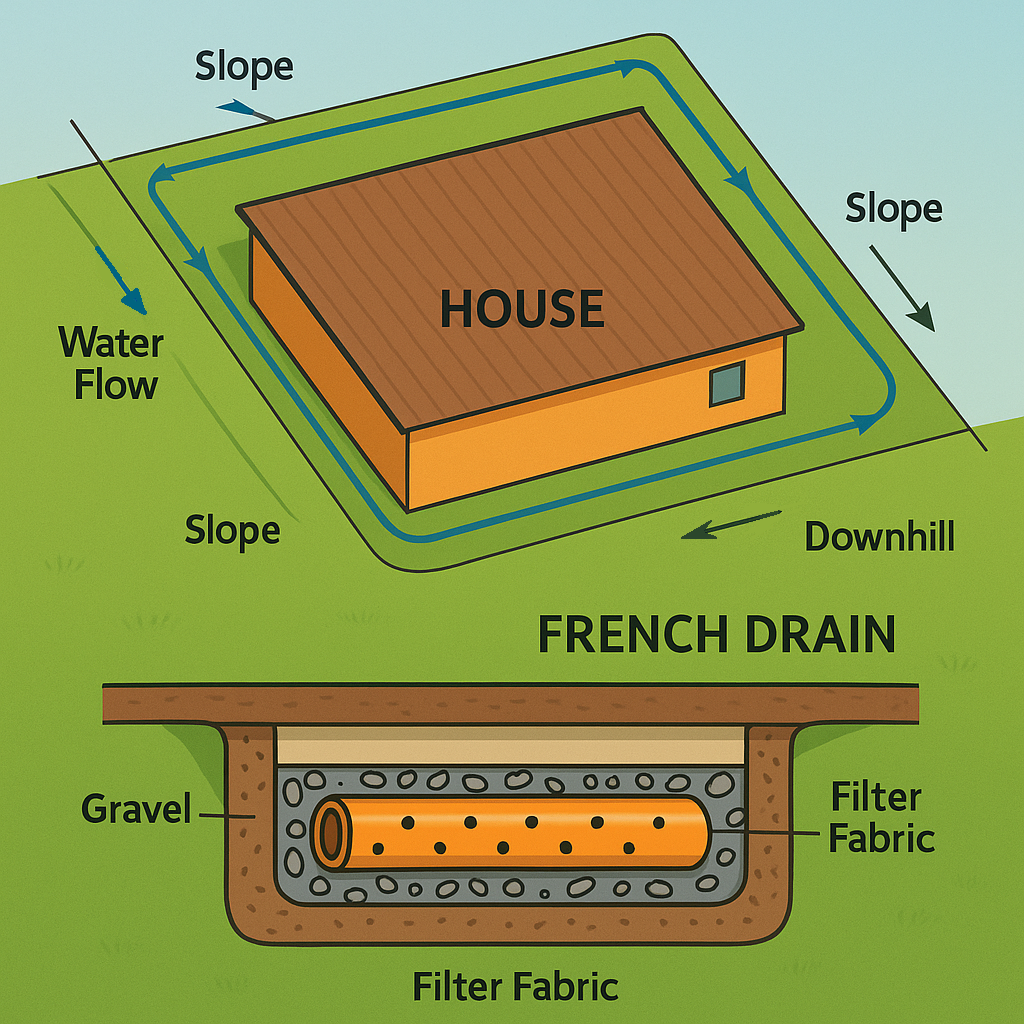
- A sloped trench (usually 1–2 ft wide, 1.5–3 ft deep)
- Lined with filter fabric
- Filled with clean stone (¾” gravel)
- Containing a perforated PVC or HDPE pipe
- Covered again with gravel, then soil, then grass or stone finish
Water enters the trench, sinks into the gravel, flows through the perforated pipe, and is carried away from your house or yard to a safe outlet. A French drain is an effective solution designed to manage and redirect excess water in various landscapes. Primarily, it serves to drain waterlogged areas, preventing the accumulation of standing water that can lead to property damage. By channeling water away from the foundation of buildings, a French drain plays a crucial role in protecting structures from moisture-related issues, such as mold and structural instability. Additionally, it helps to reduce soil erosion on slopes, maintaining the integrity of the landscape. By keeping retaining walls dry, it further enhances their durability. Overall, French drains safely redirect water from uphill to downhill, ensuring efficient drainage and safeguarding property.
How to Build a French Drain in Caribbean Terrain
Caribbean land—especially hillsides, clay soils, and sloped lots—needs special adaptations. Here’s the proper method step-by-step:
1. Assess the Natural Slope
Building a French drain requires careful assessment of the land’s natural slope, particularly in the Caribbean, where uneven terrains, clay-heavy soil, and torrential rains are common challenges. To ensure proper drainage, it’s essential to select a path that slopes downhill at a minimum of 1%, equivalent to a one-inch drop for every eight feet. Ideally, in hilly areas, a steeper slope of 2 to 3% is recommended to facilitate efficient water flow. It’s crucial to avoid running the pipe flat, as this can lead to stagnation of water, undermining the very purpose of the drain. Proper planning and execution are vital for effective drainage.
2. Dig the Trench
The second step in this process involves digging a trench, which should generally measure 12 to 18 inches in width and 18 to 36 inches in depth. It is crucial to ensure that the trench maintains a consistent downhill slope to facilitate proper drainage. If your land consists of sticky clay, you may need to dig deeper to effectively capture runoff before it accumulates. For homeowners situated on a hillside, it is advisable to position the French drain above the house. This strategic placement allows the drain to intercept slope water before it reaches the foundation, thereby protecting your home from potential water damage.
3. Line With Filter Fabric
When building a French drain, it is crucial to line it with filter fabric to ensure optimal functionality and longevity. This step is particularly important in regions with Caribbean soils, such as red or clay soils, which are notorious for clogging drainage pipes. To combat this issue, landscape fabric acts as a barrier, preventing mud infiltration that can obstruct water flow. Additionally, it safeguards against root intrusion and gravel contamination, both of which can compromise the system’s effectiveness. For this purpose, it is essential to use non-woven geotextile fabric rather than plastic, as the latter may not provide the necessary filtration and drainage properties.
4. Add Base Gravel
To effectively build a French drain, one crucial step is adding base gravel, which significantly enhances the system’s efficiency. Begin by placing 3 to 4 inches of clean gravel, ideally using #57 stone. This specific type of gravel is characterized by its uniform size, which facilitates easy water flow while preventing clogging. The layer of gravel not only serves as a foundation for the drain but also helps to filter out sediment and debris that could obstruct water movement. By ensuring proper drainage, this step plays an essential role in directing excess water away from areas prone to flooding, thereby protecting your property and maintaining its integrity.
5. Lay the Perforated Pipe (Correct Side Down)
One of the crucial steps is to lay the perforated pipe, ensuring it is positioned correctly with the holes facing down. Using a 4-inch perforated PVC pipe, this orientation allows water to flow in from below and around the pipe, effectively capturing excess moisture. To maintain the necessary slope for optimal drainage, secure the pipe using stakes or stones. This will prevent any shifting or settling that could compromise the drain’s functionality, ensuring that it efficiently channels water away from your property in the unique Caribbean landscape.
6. Backfill With Gravel
Once the trench has been properly excavated and the perforated pipe is laid in place, the next crucial step is backfilling with gravel. Begin by covering the pipe with gravel, ensuring that it rises to about 1 to 2 inches from the surface. This layer of gravel not only aids in drainage but also prevents soil from clogging the pipe. In areas with particularly intense rainfall, it may be beneficial to fill the entire trench with stone, creating a surface French drain that can effectively manage excess water. This approach helps to direct water away from structures and minimizes the risk of flooding, making it essential for maintaining the integrity of properties in the Caribbean. Proper installation of a French drain can significantly enhance drainage efficiency, ensuring that heavy rains do not lead to water accumulation and its associated challenges.
7. Wrap the Fabric Over the Gravel
Once you have excavated the trench and layered the gravel at the bottom for optimal drainage, the next step is to wrap the fabric over the gravel like a burrito. This step is essential as it keeps the gravel clean and properly filtered, preventing soil and debris from clogging the drainage system. By effectively encasing the gravel, you ensure that the water flows freely while maintaining the integrity of the surrounding landscape. Proper installation of the fabric not only enhances the performance of the French drain but also extends its lifespan, making it a vital component of the drainage process in the Caribbean’s often heavy rains.
8. Cover Surface
Once the drainage system has been installed, the final step is to cover the surface appropriately. One option is to blend soil and grass for a natural look that integrates well with the surrounding environment; this allows for easy maintenance and a lush appearance. Alternatively, decorative stones can enhance the aesthetic appeal while still providing drainage functionality. For a more contemporary option, turf or paving can be used to create a clean, modern surface. Additionally, incorporating river rock can lend a charming dry creek appearance, adding a touch of natural beauty. Each of these choices not only serves to protect the French drain but also enhances the overall landscape, ensuring that the final result is both practical and visually appealing.
Where Should the Water Drain To?
In the Caribbean, proper water drainage is crucial for maintaining both the aesthetics and functionality of a property. Typically, homeowners should direct water to a soakaway pit, which helps absorb excess moisture into the ground. Other suitable options include a driveway drain, a storm drain—if local regulations permit—steep downhill areas, or a rock-filled gully that can naturally channel water away. Additionally, creating a water garden or rain basin can provide an environmentally friendly solution for managing runoff. However, it is absolutely essential never to drain water onto a neighbor’s property, as this can lead to significant legal issues in island communities.
Special Caribbean Considerations
When building a French drain in the Caribbean, several unique considerations must be taken into account due to the region’s heavy rainfall and challenging soil conditions. Storms can deliver 3 to 8 inches of rain within hours, necessitating the use of high-capacity pipes or possibly even double pipes to manage the deluge. The clay soil prevalent in the area tends to swell and block water, requiring deeper trenches and additional gravel, with the option of adding a second drain line higher on the slope. Proper placement of French drains is crucial, particularly on hillsides, where they should be located at the top boundary of the house, along rear retaining walls, and on both sides to channel water effectively. Additionally, earth movement on steep slopes calls for tying the drains to retaining walls, swales, or gabion baskets. Care should also be taken to avoid placing drains near tropical plants like bamboo, flamboyant, almond, poui, and mango trees, as their invasive roots can easily disrupt drainage systems.
Where Should Your French Drain Go?
When determining the ideal placement for your French drain, several strategic locations should be considered to effectively manage water runoff. Firstly, positioning the drain at the upper boundary of your property, particularly on the north or east side, can capture slope water before it enters your land, providing a proactive measure against potential flooding. Additionally, installing the drain around the perimeter of your foundation is crucial for protecting your home from water intrusion. It’s also advisable to place the drain behind any retaining walls, as this can help alleviate pressure and prevent water buildup. If your driveway channels water toward your house, adding a drain along this path is essential. Lastly, ensuring the drain leads downhill to the lowest part of your property will facilitate proper water diversion, protecting your landscape from erosion and maintaining the integrity of your home’s foundation.
Conclusion
In conclusion, understanding what a French drain is and how to effectively build one on Caribbean terrain is essential for managing water drainage and preventing issues such as erosion and flooding. By carefully considering the unique soil composition, rainfall patterns, and topography of the region, homeowners can successfully implement this drainage solution to enhance their property’s resilience. With proper planning and execution, a French drain not only protects your landscape but also promotes sustainable water management practices, ensuring that your outdoor space remains functional and aesthetically pleasing. Whether you are tackling this project yourself or hiring a professional, the investment in a well-constructed French drain can yield long-term benefits for both your home and the environment.