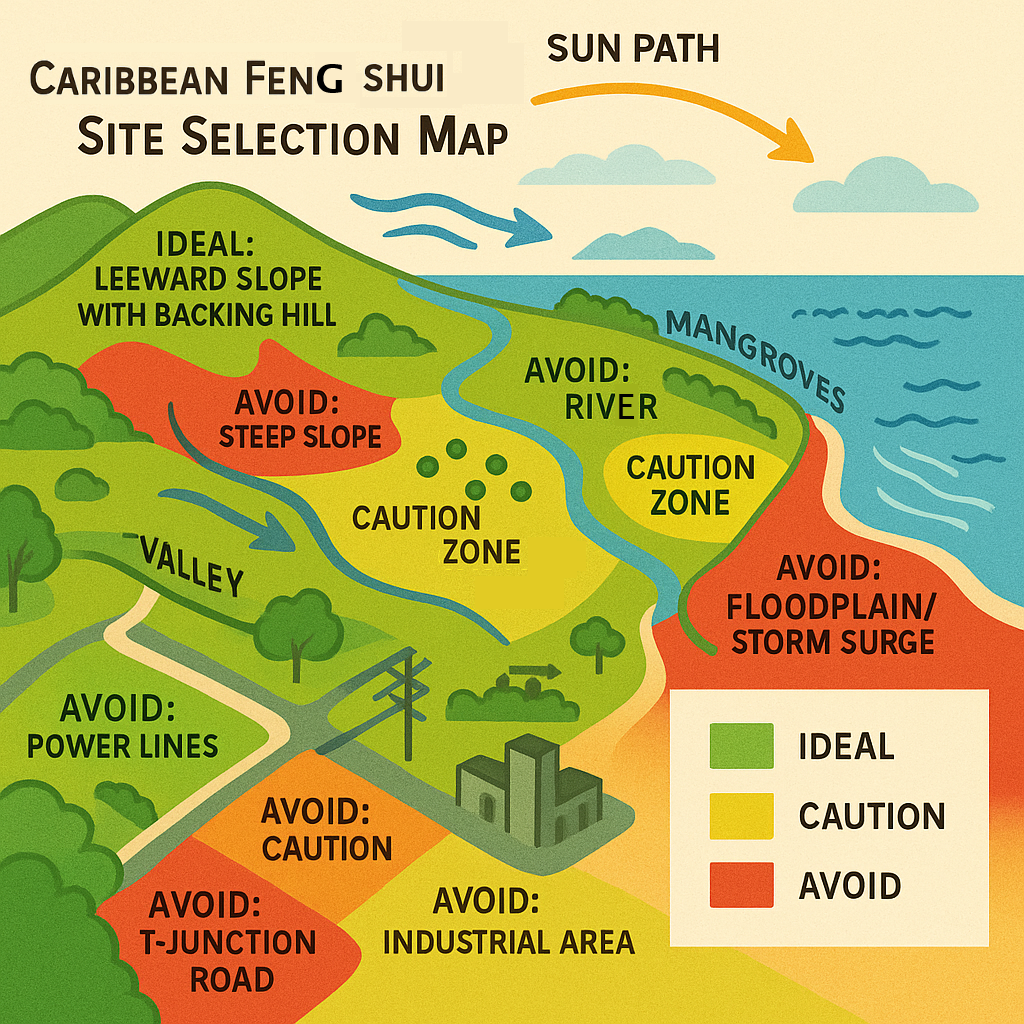

Whether you’re building inland, on the coast, or in an established neighborhood, location and orientation choices can determine not only how your home feels but also how it performs — structurally, energetically, and financially.
Below is a detailed guide on areas where caution is most important when choosing or designing a Caribbean home, combining feng shui wisdom, tropical environmental logic, and local building insight.
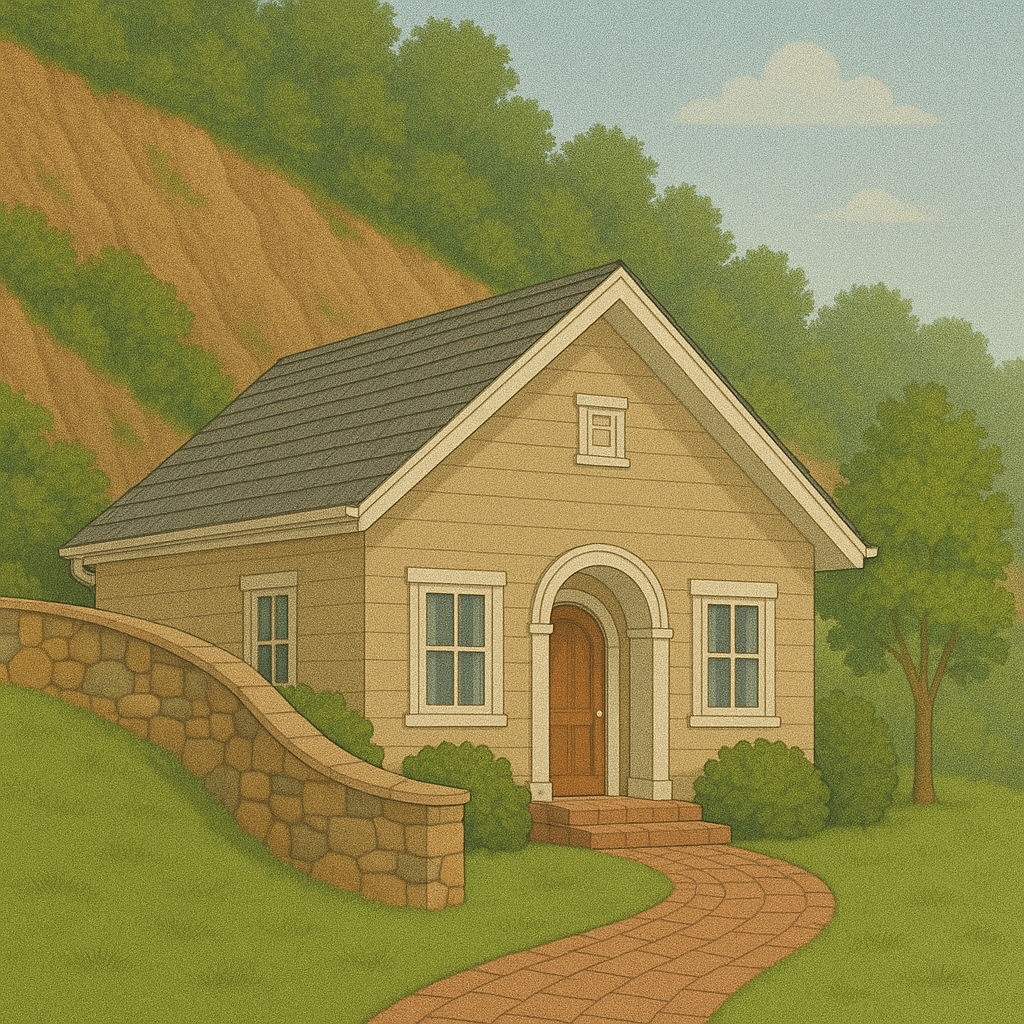
1. Steep Hillsides or Cliff Edges
⚠️ Why to Be Careful
- Erosion, landslides, or heavy runoff during rainy season can destabilize foundations.
- Homes built too close to a cliff or sharp drop-off can feel energetically “unsupported” (feng shui sees this as lacking the mountain energy of protection).
✅ What to Do
- If building on a slope, position the house on the flattest, most stable tier.
- Use retaining walls, deep pilings, and proper drainage channels.
- Keep the back of the home supported by earth or vegetation rather than exposed air.
- Add trees or stone terraces to “anchor” the site energetically.
💡 Ideal feng shui: A gentle hill or forest behind your house symbolizes support, protection, and longevity.
2. Flood-Prone or Low-Lying Coastal Land
⚠️ Why to Be Careful
- Many Caribbean areas are at or near sea level — prone to storm surge, flash floods, or saltwater intrusion.
- Floods not only damage structure but also trap stagnant water energy, creating dampness and poor Chi.
✅ What to Do
- Elevate the house on stilts or raised foundations.
- Create natural drainage paths or French drains leading away from the home.
- Use salt-resistant concrete and paints for coastal builds.
- Avoid placing bedrooms or main entrances directly facing flood flow lines.
💡 Feng shui tip: Water should “flow toward” your home gently — not into it. Rapid or pooling water brings unstable energy.
3. Areas Exposed to Strong Winds (Hurricane Paths)
⚠️ Why to Be Careful
- Hilltops and coastal ridges face direct hurricane-force winds and flying debris.
- Open orientations facing the Atlantic trade winds can make homes noisy and unstable.
✅ What to Do
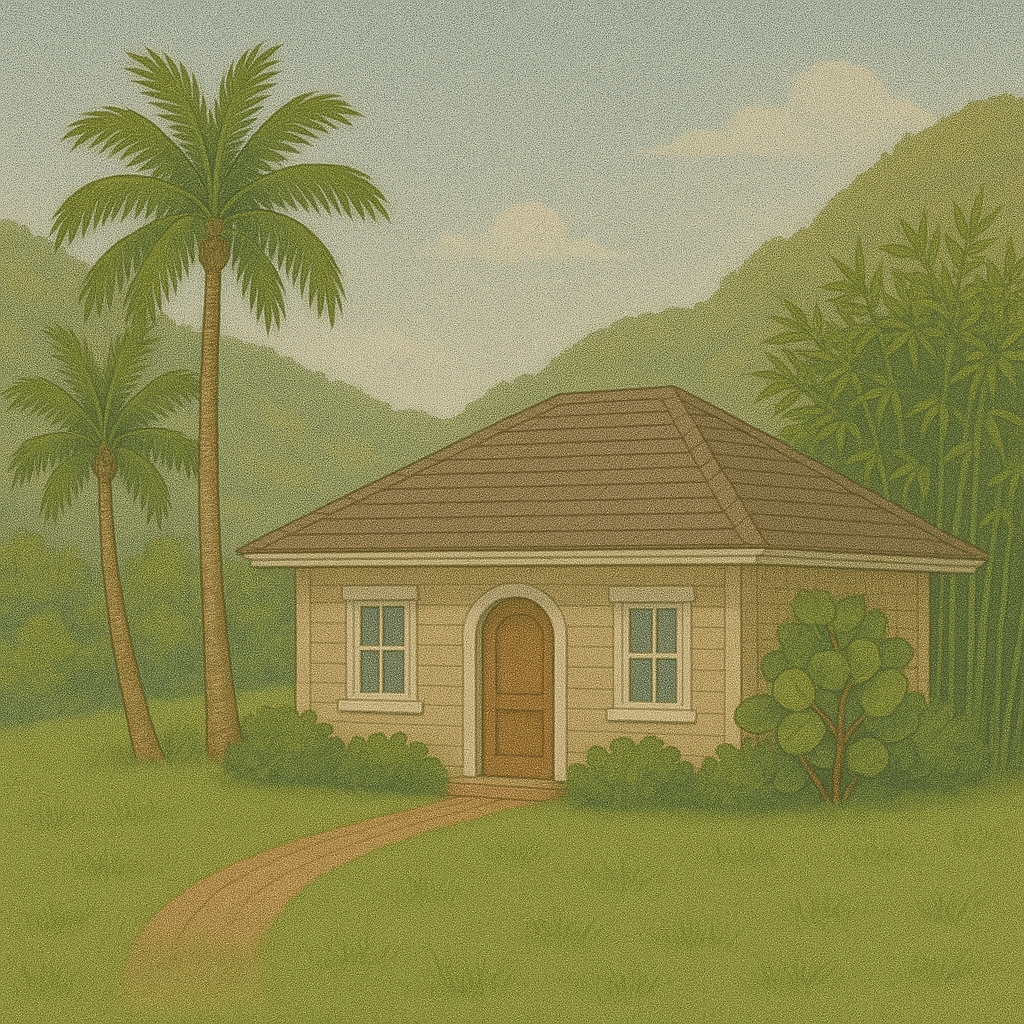
- Choose wind-protected valleys or leeward slopes where natural vegetation acts as a barrier.
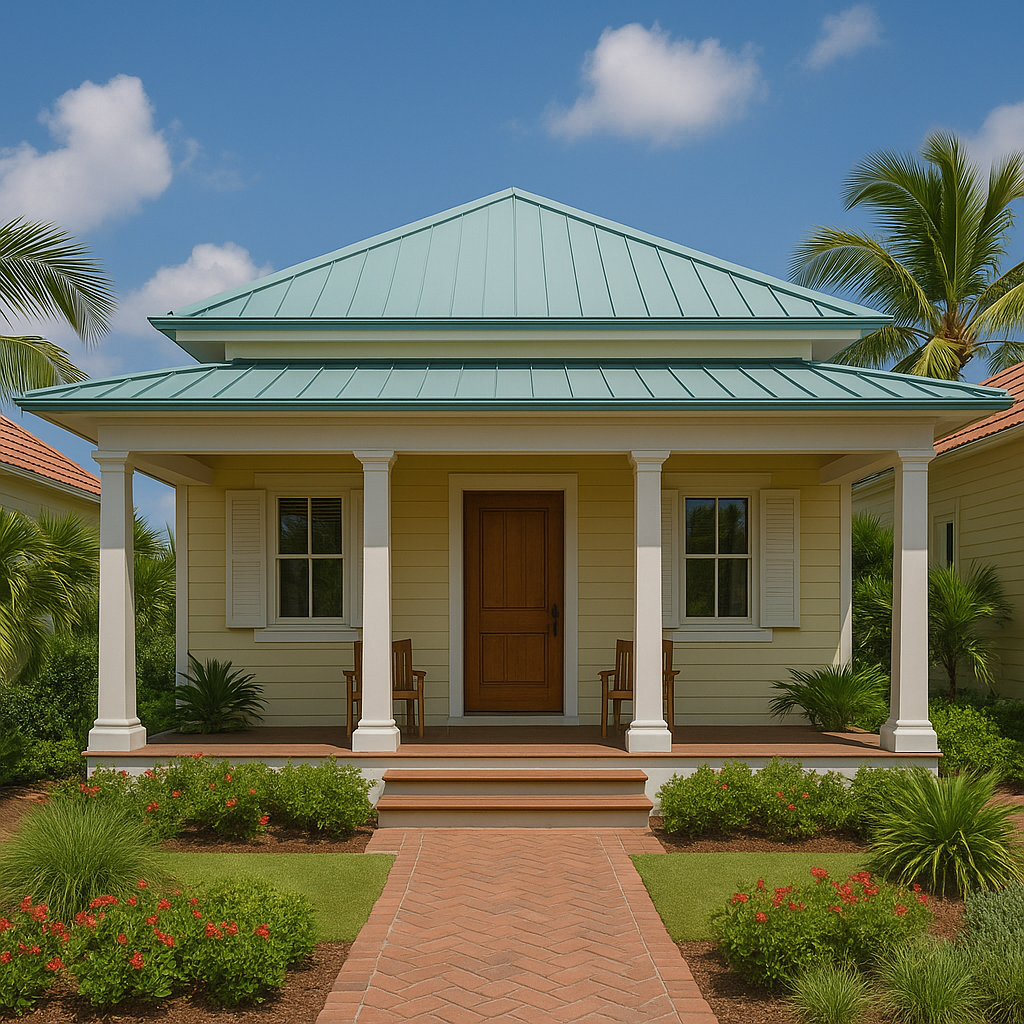
- Use hipped roofs (not gabled) and hurricane clips for structure.
- Plant windbreak trees (palm, sea grape, bamboo) on the windward side.
💡 Feng shui note: Gentle wind = refreshing Chi; harsh wind = disruptive Chi. Orient doors and windows to catch breezes, not blasts.
4. Near Fault Lines, Loose Rock, or Unstable Soil
⚠️ Why to Be Careful
- Earthquakes (especially in Eastern Caribbean islands) and unstable fill sites can cause severe foundation shifting.
- In feng shui, “shaking” land symbolizes unstable fortune or unpredictable life patterns.
✅ What to Do
- Request a geotechnical soil test before construction.
- Avoid reclaimed or filled land unless it has been compacted and tested.
- If unavoidable, use deep pilings or reinforced concrete slabs for stability.
5. Near Major Roads, T-Junctions, or Sharp Corners
⚠️ Why to Be Careful
- Roads that point directly toward your home or lot bring “fast-moving energy” — known in feng shui as “sha chi” (cutting energy).
- The constant movement of cars creates pressure and agitation.
✅ What to Do
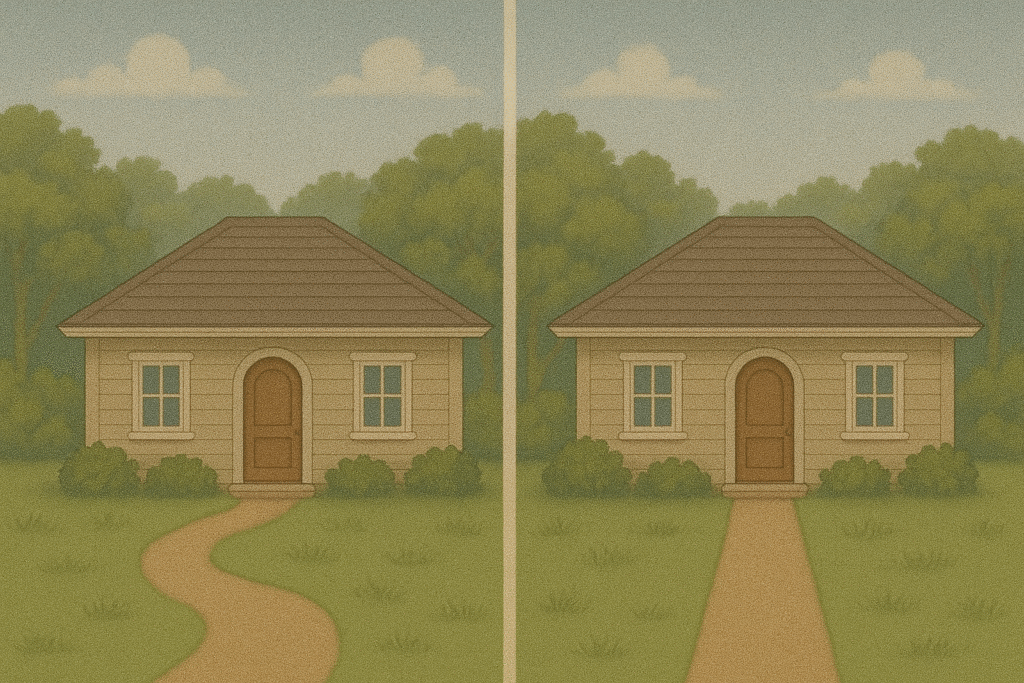
- Choose lots where roads curve gently or flow alongside rather than directly into the property.
- Use landscaping, fencing, or stone walls to buffer high traffic zones.
- Place your main door slightly off the direct line of any incoming street.
💡 Energetically: Curving paths mimic the flow of rivers — smooth, nourishing Chi — while straight ones rush energy too quickly.
6. Near Power Lines, Transformer Boxes, or Cell Towers
⚠️ Why to Be Careful
- These create electromagnetic interference and can subtly affect rest and mood.
- In feng shui, they’re seen as “sha chi” — sharp, buzzing energy that disturbs serenity.
✅ What to Do
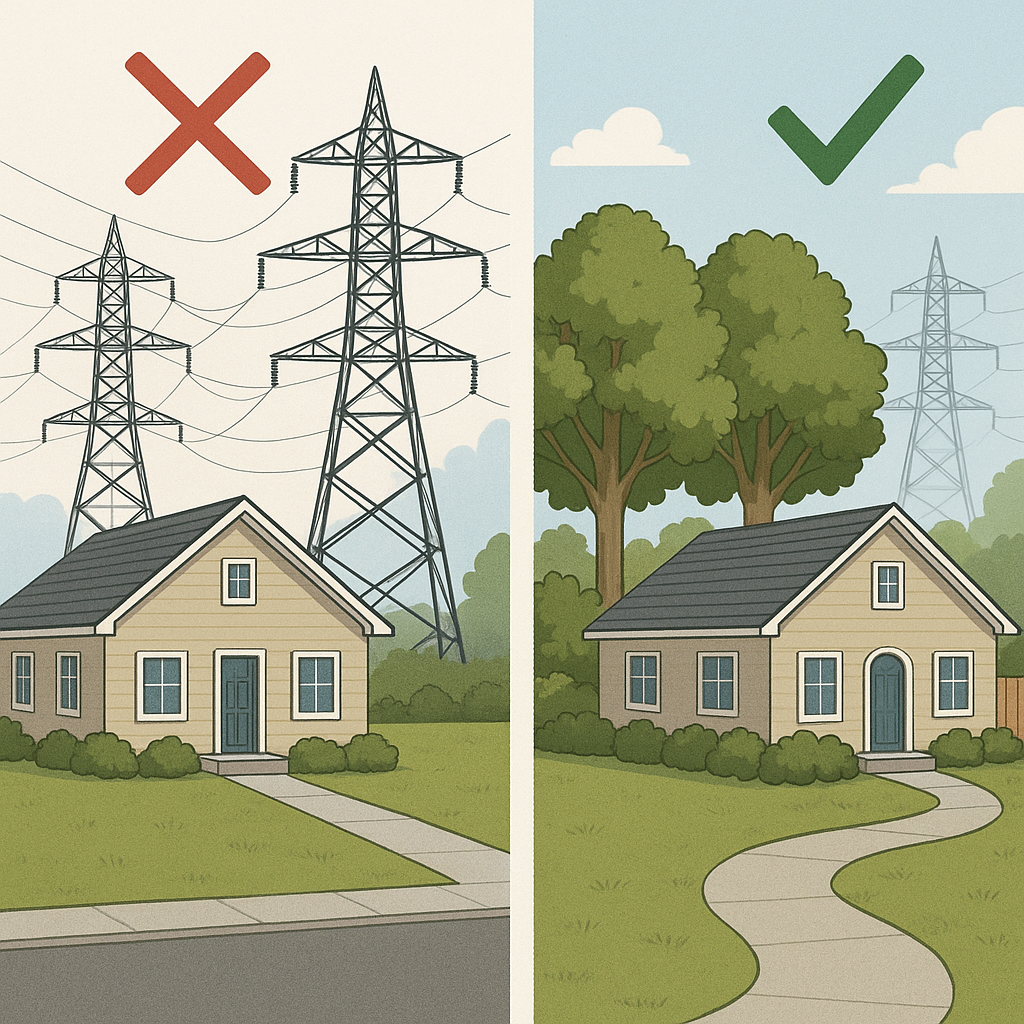
- Keep at least 50–100 feet away from high-voltage lines or towers.
- If unavoidable, use trees or earthen walls as shielding.
- Ground your home’s electrical system well.
💡 Feng shui principle: Aim for quiet, natural energy — not vibration or hum.
7. Industrial or Heavily Developed Surroundings
⚠️ Why to Be Careful
- Factories, warehouses, or noisy commercial areas emit polluted Chi (noise, dust, and visual clutter).
- Too much concrete and too little greenery creates “dry energy,” lacking vitality.
✅ What to Do
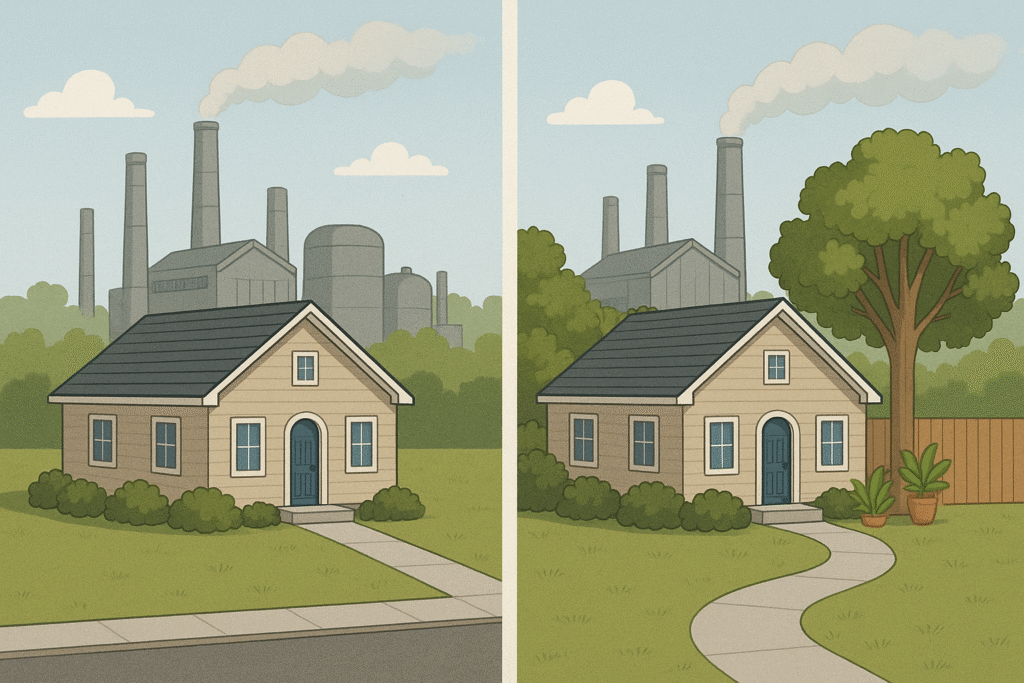
- Choose a location near vegetation, gardens, or water to rebalance.
- Add trees, hedges, or walls to block views and sounds of industrial sites.
- Focus on airflow and purification inside your home — natural ventilation, indoor plants, etc.
🌋 8. Building Too Close to Rivers or Waterfalls
⚠️ Why to Be Careful
- While water symbolizes prosperity, proximity matters — strong, noisy, or unpredictable water can overwhelm rather than nourish.
- Riverbanks may shift during flooding or heavy rain.
✅ What to Do
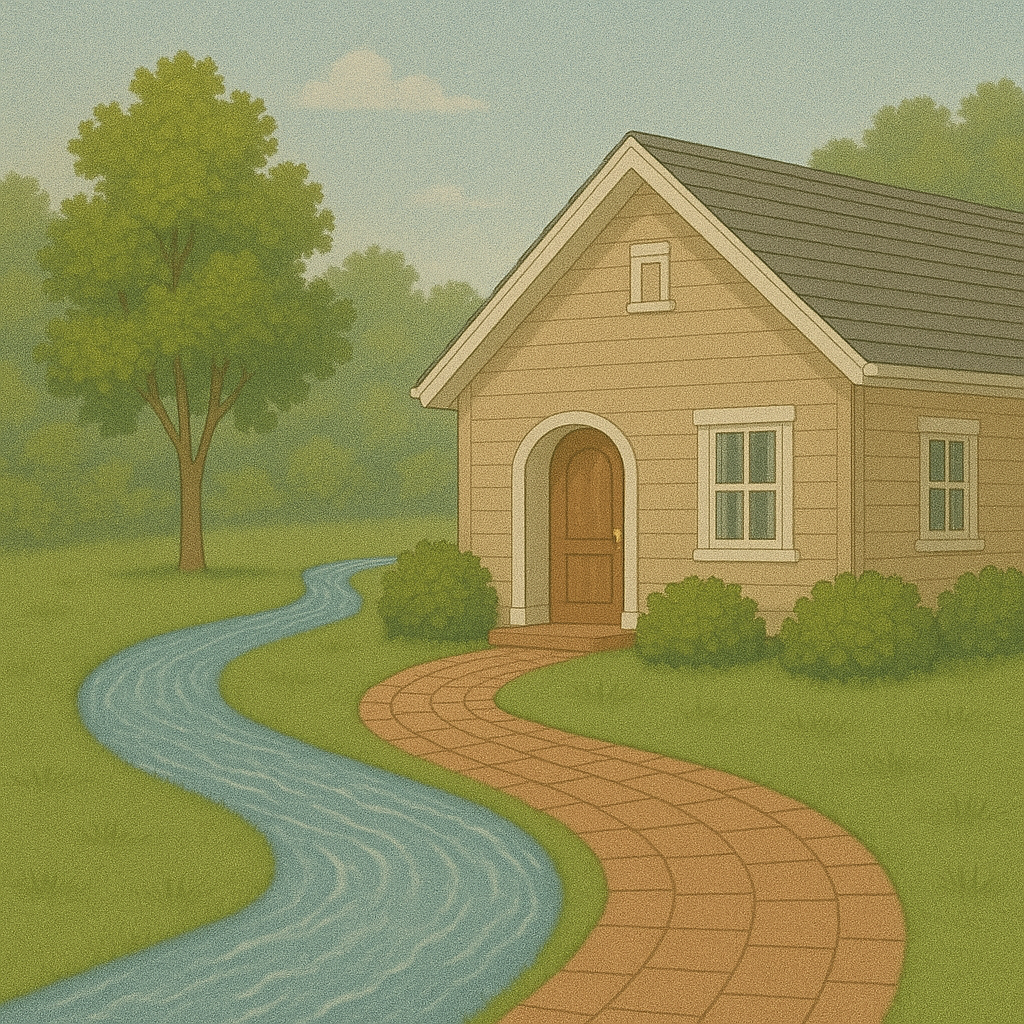
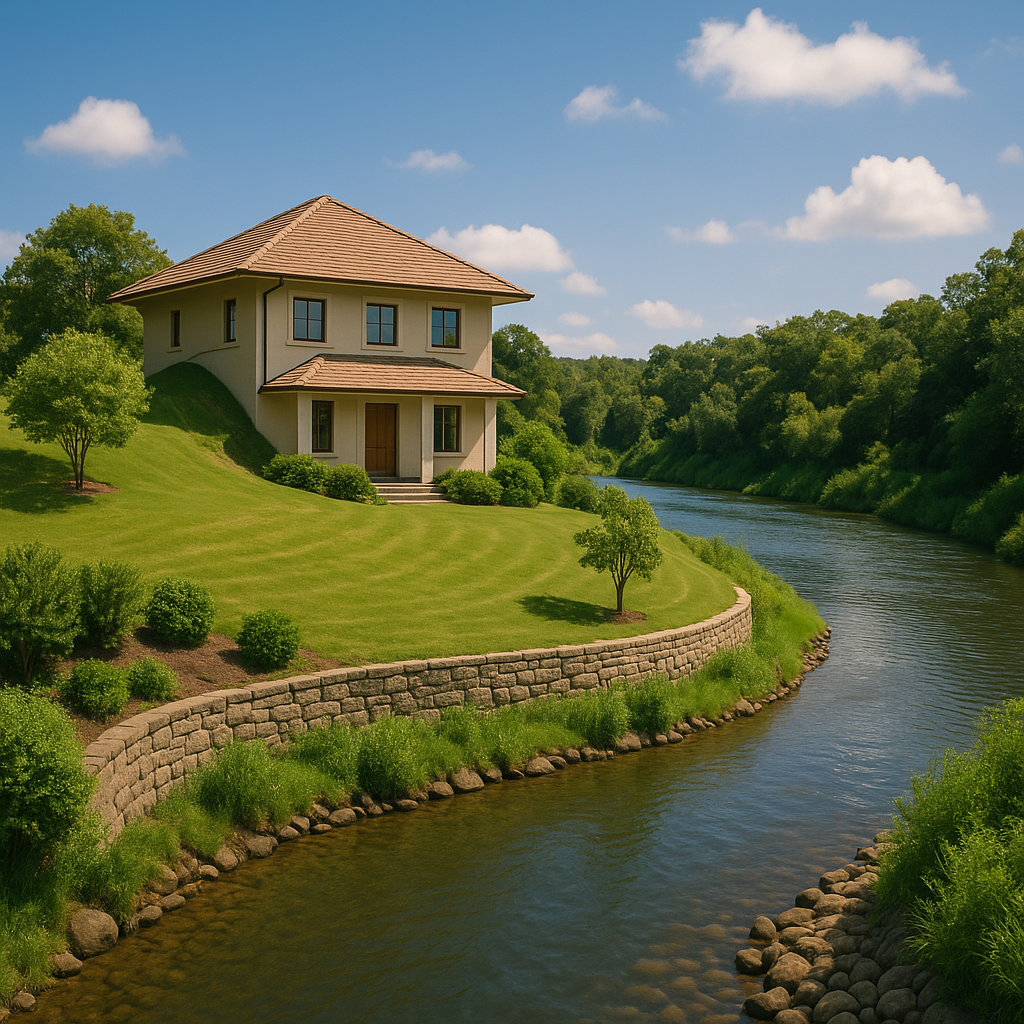
- Choose elevated positions overlooking water, not sitting right at its edge.
- Ensure the flow of the river or stream moves calmly past (left to right or diagonally), not straight toward the front door.
- Stabilize banks with stones or retaining walls if nearby.
💡 Feng shui insight: Still or gently flowing water near the entrance is auspicious; aggressive flow drains wealth energy
9. Crowded or Confined Plots
⚠️ Why to Be Careful
- In neighborhoods where homes are tightly packed, energy has no space to circulate.
- Shadows or high walls from neighboring buildings can make your home feel heavy or energetically “trapped.”
✅ What to Do
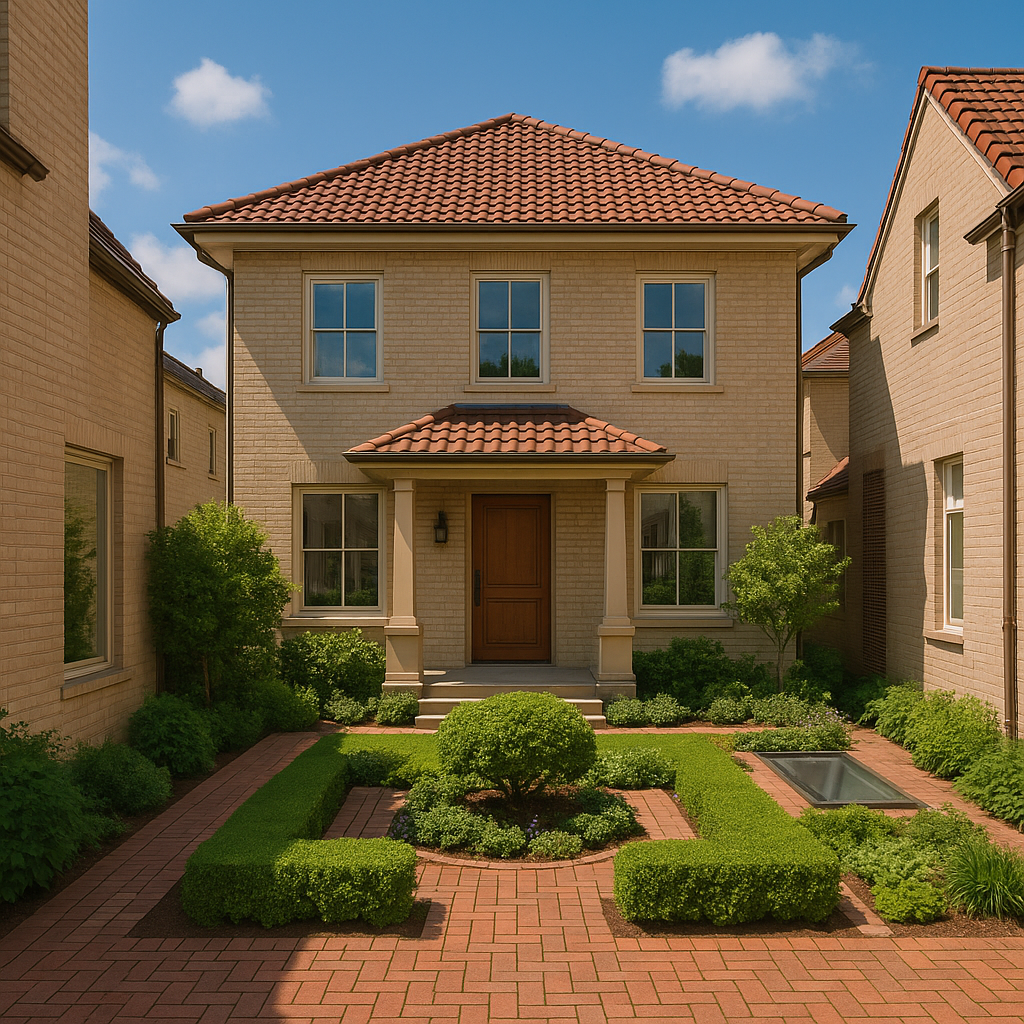
- Maintain setbacks for light and air circulation.
- Add mirrors, skylights, and greenery to open up the Chi.
- If possible, design a courtyard or inner garden to bring natural vitality back in.
10. Wrong Orientation for Light and Air
⚠️ Why to Be Careful
- Orienting your house to face constant sun exposure (west-facing) can lead to overheating and discomfort.
- Poor ventilation or dark corners lead to “stale Chi” — tired, damp energy.
✅ What to Do
- In the Caribbean, east or southeast-facing homes are best for morning light and airflow.
- Use shading roofs, verandas, or blinds for hot western sides.
- Keep a balance of sunlight and shade for comfort and energy harmony.
In Summary
Here’s a quick reference table for caution zones and fixes:
| Caution Area | Risk | Remedy / Best Practice |
|---|---|---|
| Steep slopes | Landslides, instability | Build on terraces; retain soil |
| Flood zones | Water damage, mold | Raise foundation, drainage |
| Strong wind zones | Roof damage | Hipped roofs, windbreak trees |
| T-junctions / roads | Harsh energy | Curved paths, greenery buffer |
| Power lines | Electromagnetic energy | Keep distance, shield with trees |
| Industrial zones | Polluted air/noise | Natural barriers, ventilation |
| Overcrowded areas | Blocked Chi | Courtyards, mirrors, plants |
| Overexposure to sun | Overheating | Shade, east-facing orientation |
Final Thought
When building or buying a home in the Caribbean:
- Blend common-sense environmental awareness with feng shui wisdom.
- Aim for balance: protection behind (earth/hill), openness in front (light/view), and gentle flow all around (air/water).
- Let your home breathe, stay cool, and stay grounded — physically and energetically.
Finally, here is a visual Caribbean Feng Shui Site Selection Map — showing good and bad plot positions (like hillside, valley, near road, or coast), with energy flow arrows and ideal house placement examples.