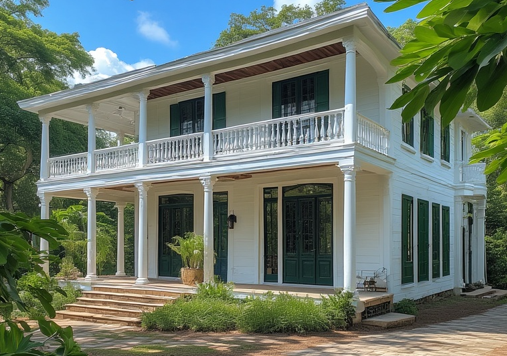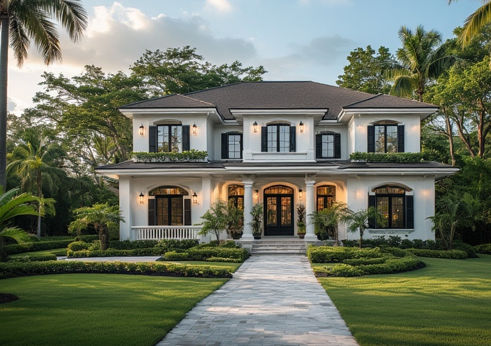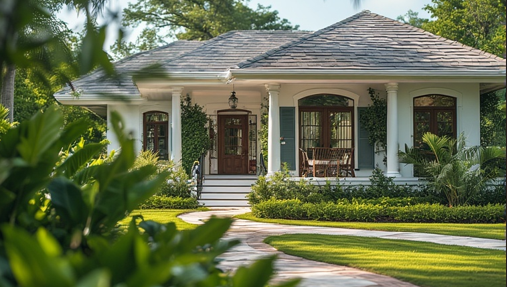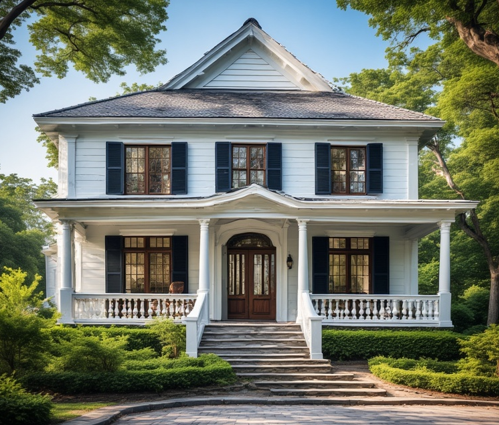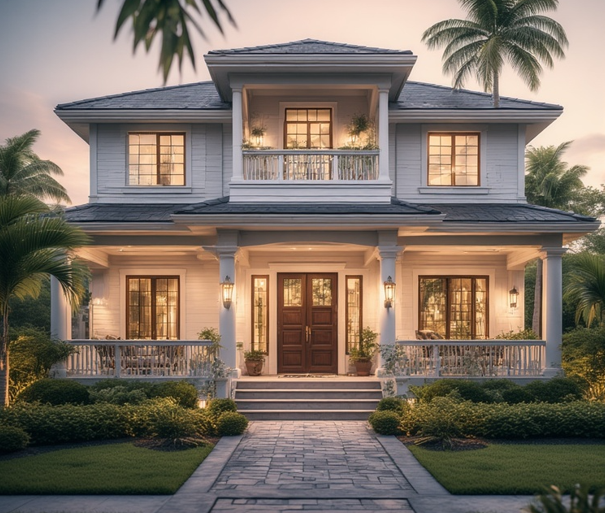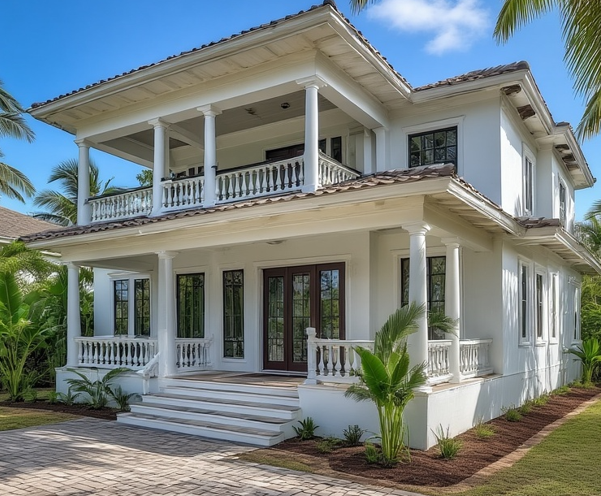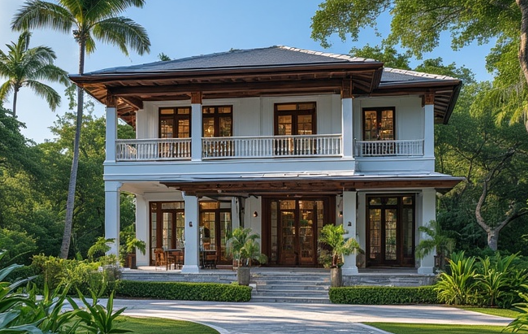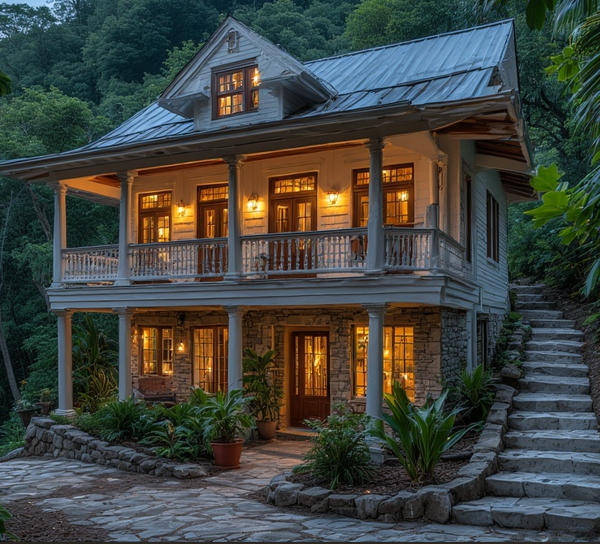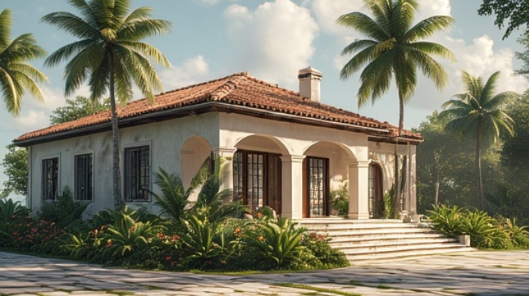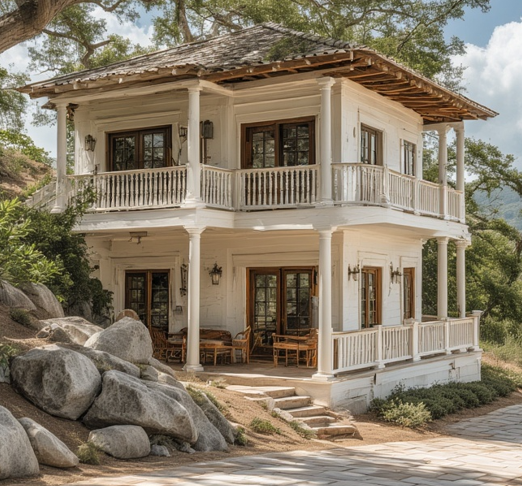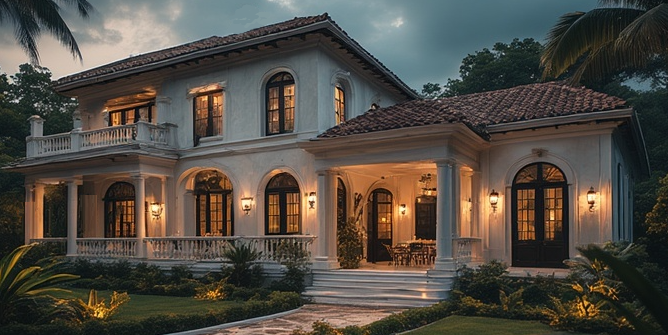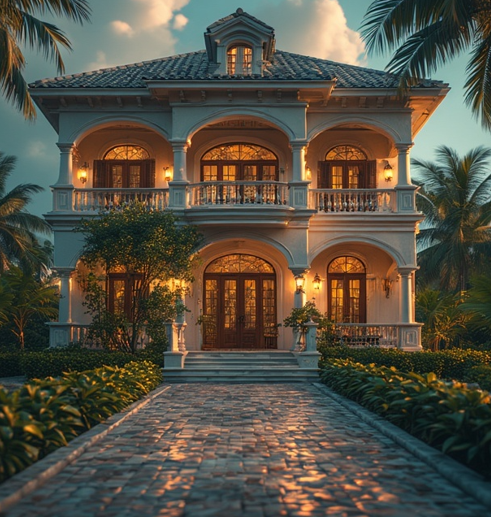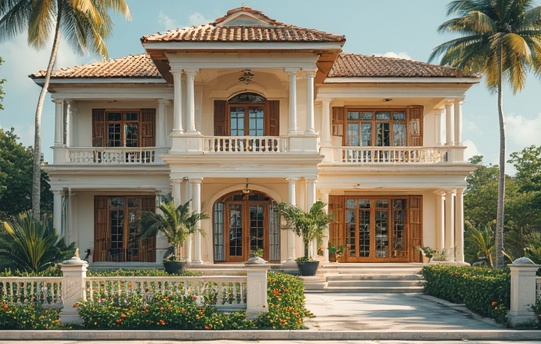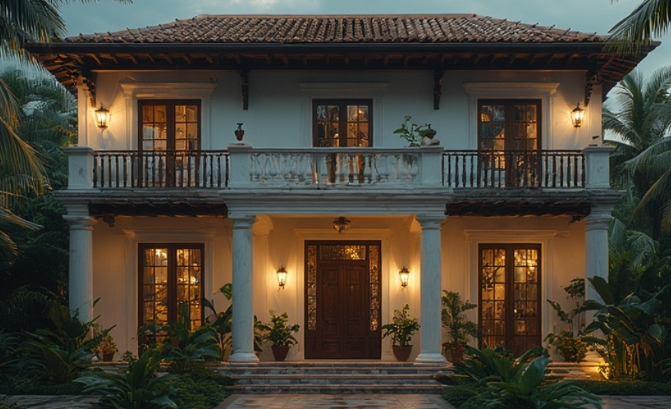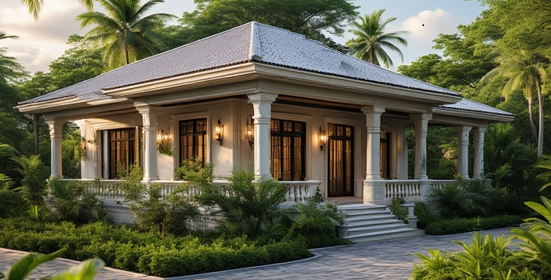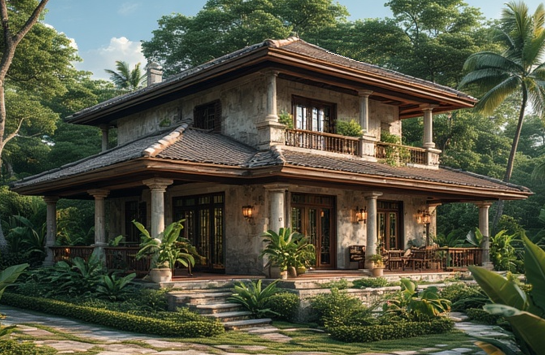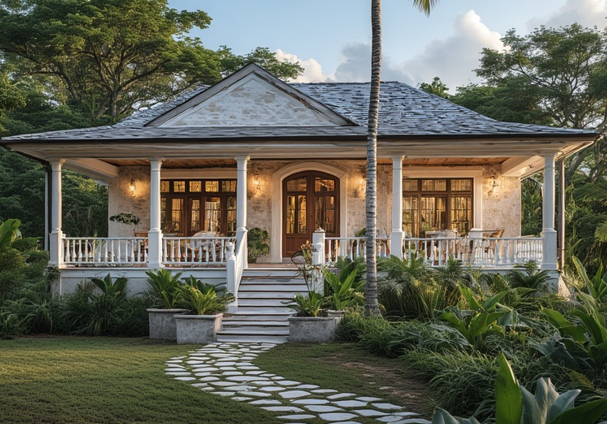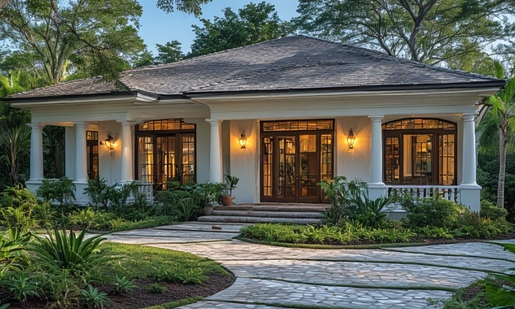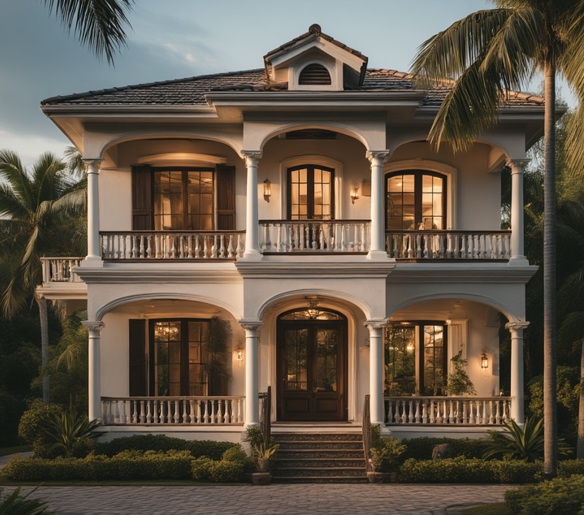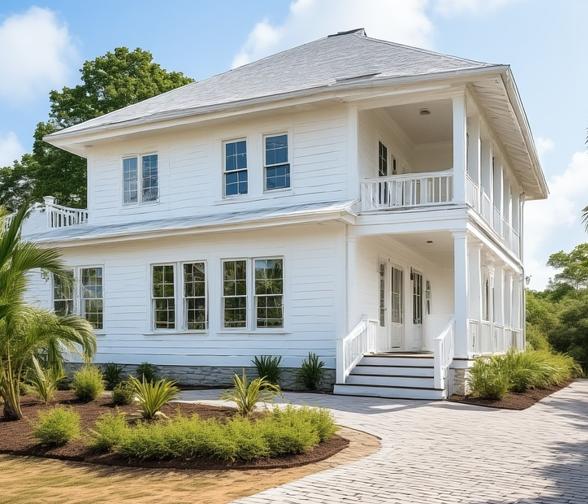

The Plantation Design Style is one of the grandest and most romantic architectural legacies in the Caribbean — a style that beautifully merges colonial elegance, tropical functionality, and natural connection. It was born from the plantation era but has evolved into a modern classic for Caribbean living, celebrated for its spacious layouts, cooling verandas, and stately charm.
Here’s everything you should know if you’re considering it for your home:
What Is the Plantation Design Style?
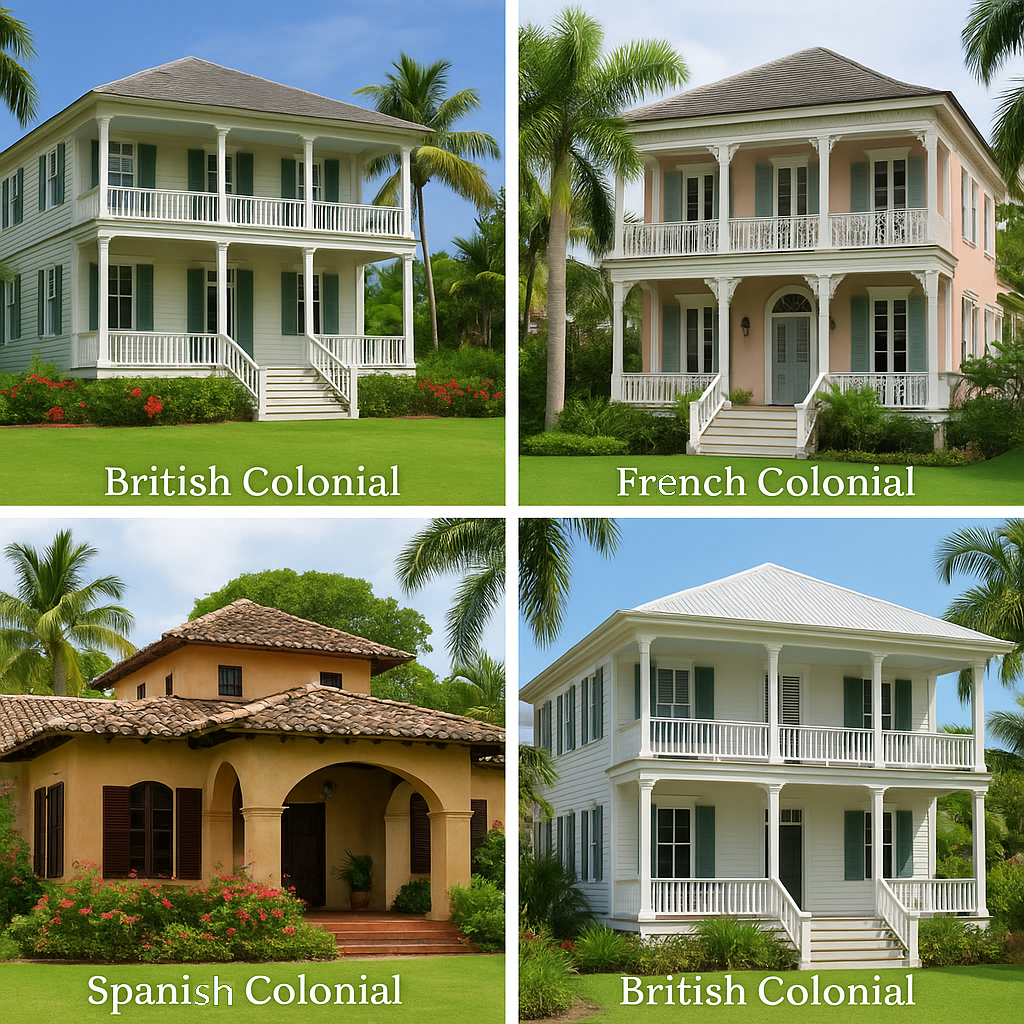
The Plantation style originated during the 18th and 19th centuries, when large agricultural estates (or plantations) were established across the Caribbean by British, French, and Spanish settlers. The homes built on these estates were designed to withstand tropical heat and storms, accommodate family life and social gatherings, and show a sense of prestige and balance.
Over time, the style became synonymous with:
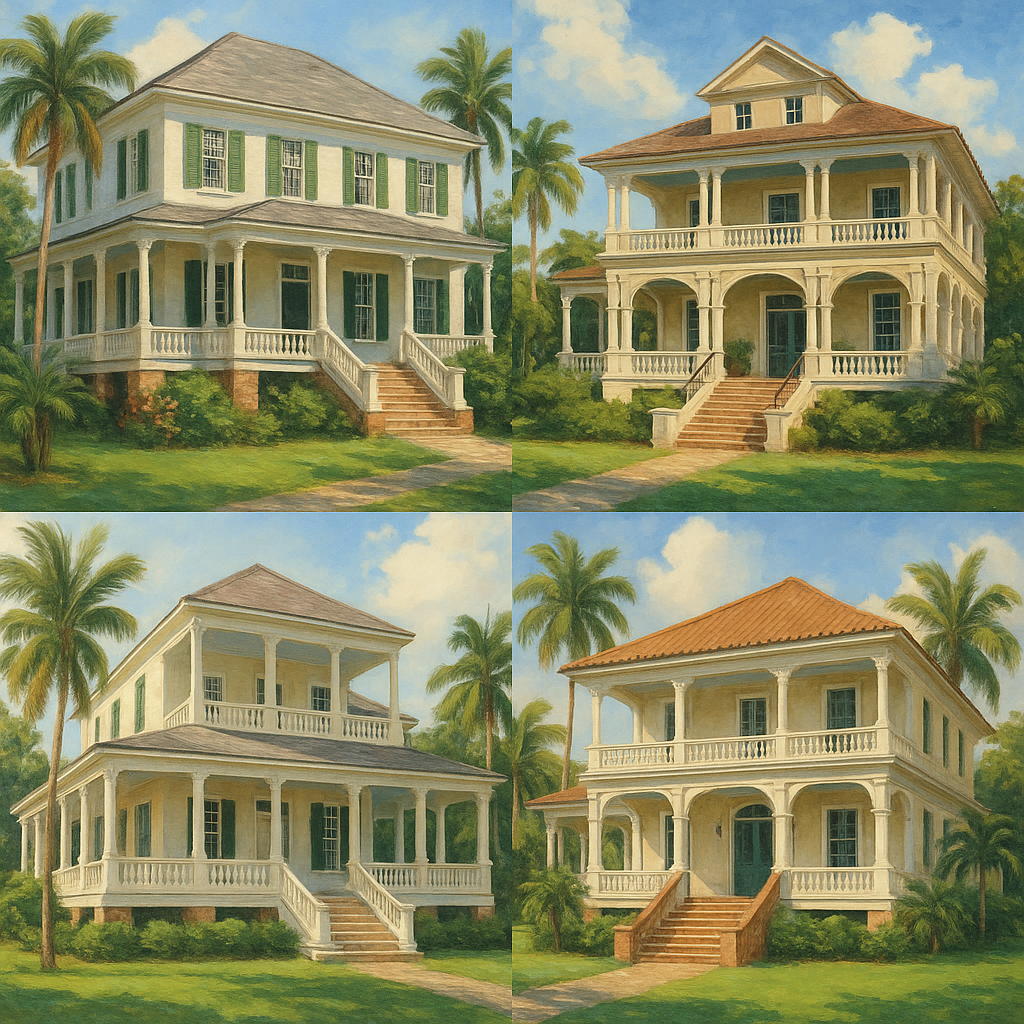
- Large, airy verandas and wraparound galleries
- High ceilings and tall doors
- Deep roof overhangs for shade
- Symmetrical facades with central entrances
- Wide staircases and columned porches
- Expansive floor plans that open onto gardens or courtyards
Why Choose the Plantation Style for a Caribbean Home
1. Perfectly Suited for the Climate
Plantation homes were designed with tropical comfort in mind, long before the advent of air conditioning. These distinctive structures feature wide verandas and galleries that effectively shield the interior walls from the harsh rays of the sun, creating a cooler atmosphere within. The high ceilings and strategically positioned windows enhance cross-ventilation, allowing refreshing breezes to flow through the living spaces. Additionally, roof overhangs and shutters offer protection against intense rain and wind, further contributing to the homes’ resilience in a tropical climate. The culmination of these architectural elements results in a living environment that feels naturally cool, airy, and serene throughout the year.
2. Elegant and Timeless Aesthetics
Plantation homes embody an elegant and timeless aesthetic, showcasing architecture that reflects grandeur without veering into ostentation. Characterized by stately columns, graceful arches, and expansive verandas, these homes balance European formality with the relaxed ease of island living. This harmonious blend allows for spacious designs that work beautifully as large family residences, inviting guest houses, or charming boutique villas. The result is a sophisticated, tropical look that transcends trends, ensuring that plantation homes remain perpetually stylish and desirable. Their enduring appeal lies in their ability to evoke a sense of both luxury and comfort, making them a favored choice in tropical settings.
3. Ideal for Indoor–Outdoor Living
Plantation homes are the epitome of indoor-outdoor living, masterfully blurring the lines between interior spaces and the natural environment. With their wraparound verandas and elegant French doors, these residences facilitate a seamless transition between cozy living areas and lush gardens, inviting the outdoors in. This architectural design is particularly advantageous for entertaining guests, as the open layout encourages social gatherings amidst beautiful surroundings. Whether hosting lively soirées or simply unwinding while taking in breathtaking Caribbean sunsets, plantation homes are crafted for a lifestyle that embraces nature and leisure. They offer more than mere shelter; they create a harmonious balance with the outdoors.
4. Strong and Resilient
Plantation homes are architectural marvels, typically constructed with sturdy timber or masonry to ensure durability across generations. Built with deep foundations, reinforced roof trusses, and elevated floors, these homes are designed to withstand the harsh impacts of hurricanes and floods. The thoughtful layout of plantation homes naturally distributes wind loads, significantly reducing the potential for storm damage. This combination of robust materials and intelligent design results in a lasting structure that not only stands the test of time but is also equipped to adapt to modern standards of living. Ultimately, plantation homes exemplify resilience and functionality in the face of nature’s challenges.
Key Architectural Features
| Feature | Purpose / Benefit |
|---|---|
| Wraparound Verandas | Provide continuous shade and outdoor living space. |
| High Ceilings (10–14 ft) | Keep interiors cool and airy. |
| Tall, Shuttered Windows | Maximize ventilation and protection from weather. |
| Symmetrical Facade | Adds aesthetic balance and grandeur. |
| Large Stairways | Elevate the home and create presence. |
| Columns & Arches | Classic elegance with structural strength. |
| Open Central Hallway | Enhances airflow and connects rooms. |
| Metal or Tile Roofs | Resist rain and heat effectively. |
Design and Decor Elements
Designing and decorating plantation-style homes involves a thoughtful selection of materials, colors, furniture, and landscaping elements that together create an inviting and harmonious atmosphere. The traditional materials used in these homes include wood, stone, brick, and plaster, while modern adaptations often incorporate reinforced concrete and steel for durability. The color palette typically features creams, whites, sage greens, coral, pale blues, and earthy tones, all chosen to reflect sunlight and complement the surrounding greenery. Furniture made from cane, wicker, and mahogany, along with airy linen fabrics, enhances the colonial charm of these spaces. Landscaping plays a crucial role, with symmetrical gardens, elegant fountains, and rows of palms adding to the overall aesthetic appeal.
Modern Adaptations
Today’s plantation-style homes are a harmonious blend of traditional exteriors and modern interiors, seamlessly marrying classic charm with contemporary functionality. These homes often feature open-concept kitchens and living spaces that foster a sense of togetherness and flow, making them ideal for modern lifestyles. With an increasing emphasis on sustainability, many of these homes incorporate energy-efficient insulation and solar panels, significantly reducing their environmental impact. Additionally, rainwater harvesting systems are becoming more common, promoting responsible water usage. Modernized materials are utilized to minimize maintenance needs, allowing homeowners to enjoy the grandeur and ventilation of classic designs while embracing eco-conscious living.
Why It’s Still Popular in the Caribbean
Plantation-style homes remain popular in the Caribbean due to their unique ability to balance heritage with luxury. These homes are ideally suited for large properties, villas, and scenic hillside or coastal lots, making them a perfect fit for the region’s breathtaking landscapes. Their design offers unparalleled comfort and status, creating an inviting atmosphere that fosters a strong connection to nature. Moreover, plantation-style homes reflect the rich history of the islands while simultaneously embracing a modern tropical lifestyle. This fusion of the past and present not only appeals to homeowners but also enhances the cultural identity of the Caribbean, ensuring their enduring popularity.
Modern Adaption of the plantation style homes:
Conclusion
In conclusion, the Plantation Style home stands as a testament to the harmonious blend of elegance, functionality, and cultural heritage. Its design principles not only provide natural ventilation and cooling but also create a stately presence that enhances any landscape. By seamlessly integrating with nature, these homes offer a serene living environment while ensuring durability and resilience against harsh weather conditions, such as hurricanes. Embracing the rich Caribbean heritage, the Plantation Style remains an ideal choice for those seeking a timeless and sophisticated abode that reflects both beauty and practicality. As homeowners continue to prioritize sustainability and comfort, the enduring appeal of this architectural style is sure to thrive in modern settings.
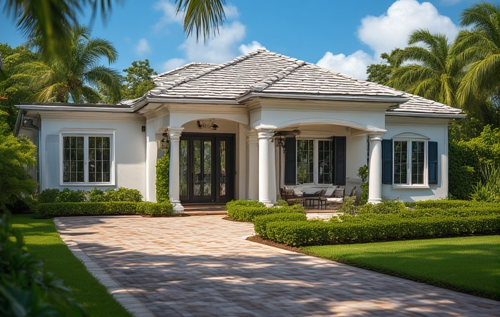
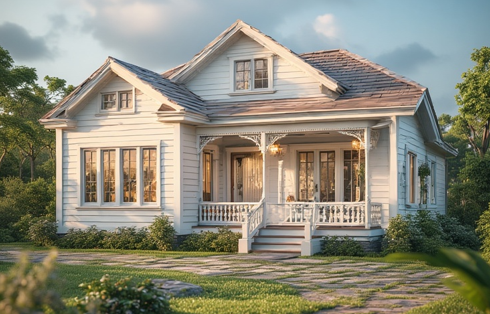
Here are some more examples of homes inspired by the Colonial or Plantation Design Style.