

In hot-humid climates, the layout of windows is far more critical than their size. The strategic placement of windows can significantly influence a home’s overall comfort and energy efficiency. Poorly positioned windows can trap heat and moisture inside, creating an uncomfortably warm and humid environment that requires excessive air conditioning to mitigate. Conversely, thoughtfully designed window layouts can harness natural ventilation and promote airflow, allowing the house to naturally cool itself. By optimizing window placement to align with prevailing breezes and maximizing shade during the hottest parts of the day, homeowners can enhance indoor comfort while reducing reliance on artificial cooling systems.
Here is a clear, builder- and homeowner-friendly explanation of GOOD vs BAD window placement, using simple diagrams and explanations.
1. BAD WINDOW LAYOUT
❌ Single-Sided Windows (No Exit for Air)
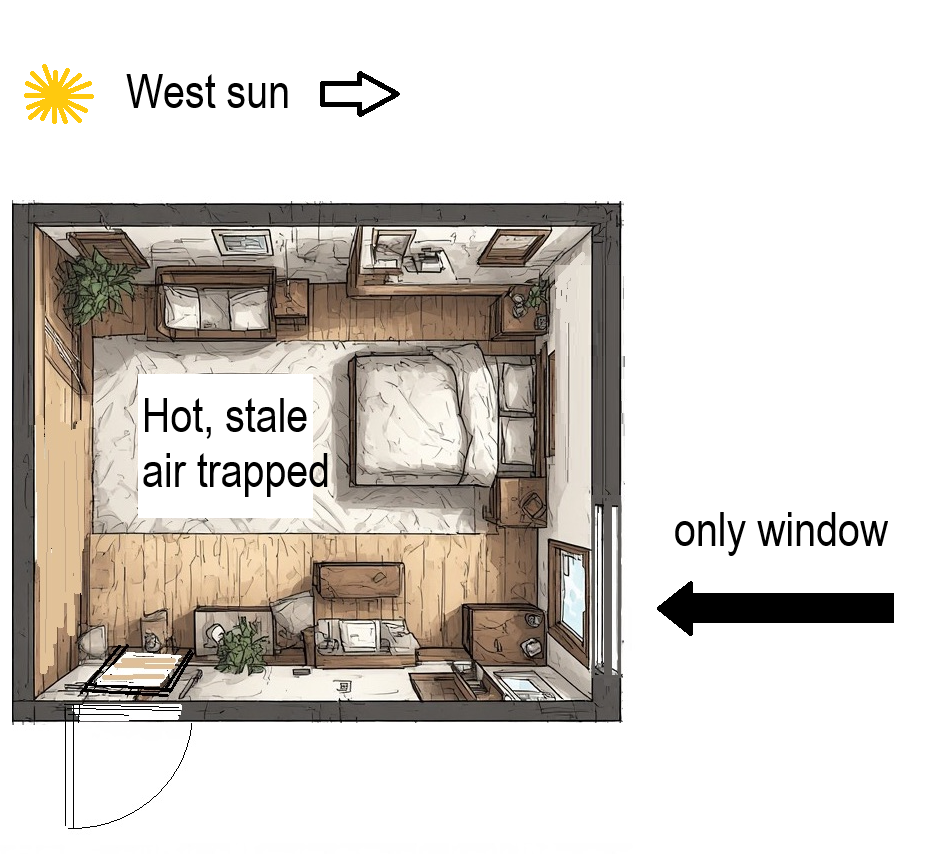
What’s wrong
- Windows on only one wall
- Air enters but has no way out
- Heat builds up and lingers
- Curtains stay closed all day
What happens in real life
- Room feels stuffy even with windows open
- AC runs longer and harder
- Mold and odors appear over time
Common mistake: large fixed glass on one façade.
2. GOOD WINDOW LAYOUT
✅ Cross-Ventilation (Air In + Air Out)
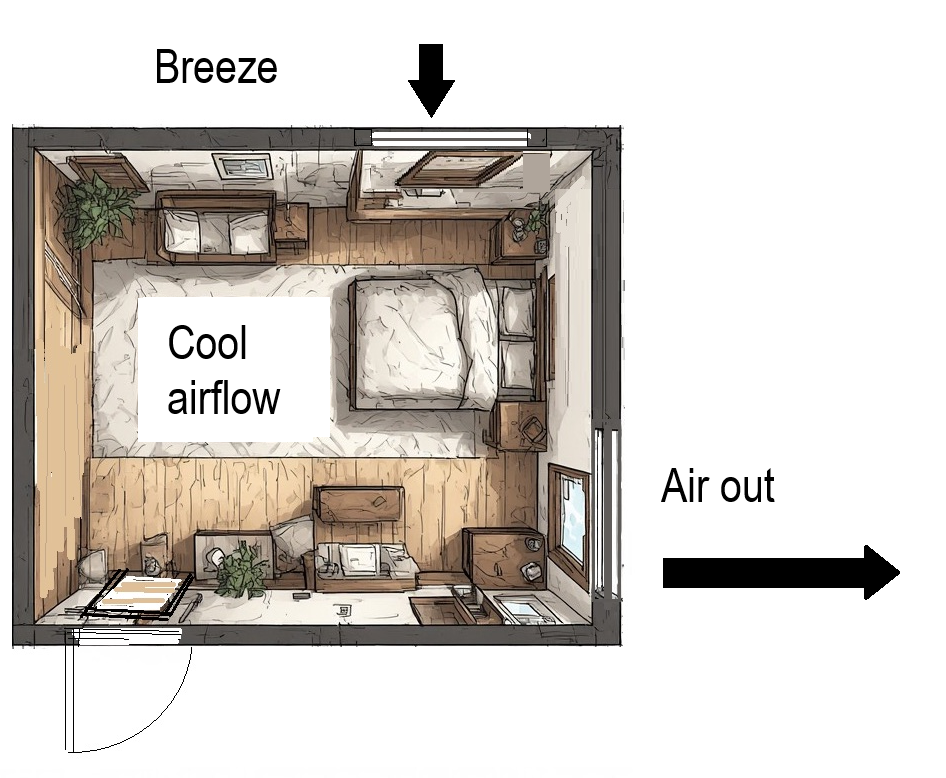
Why this works
- Openings on two opposite or adjacent walls
- Air flows through, not just in
- Heat and humidity are flushed out
Real Benefits
- Interior feels cooler without AC
- Faster drying after rain
- Better sleep and comfort
Rule: every main room should have two airflow paths.
3. BAD WINDOW LAYOUT
❌ All Windows at the Same Height
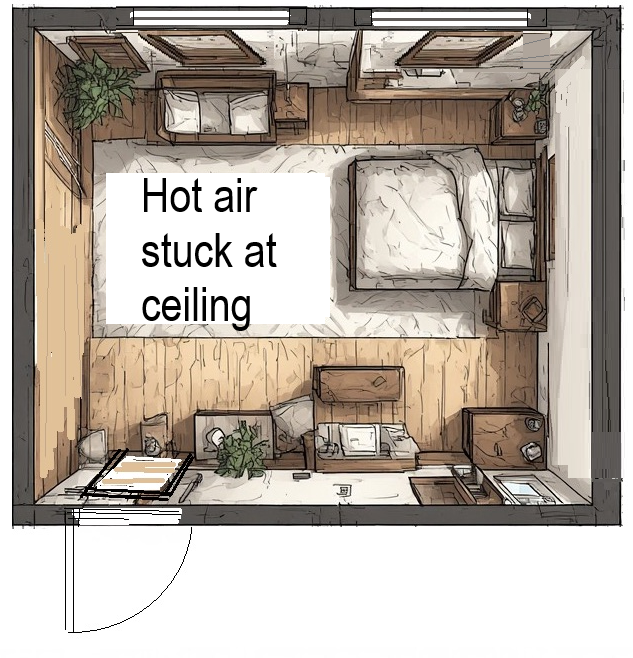
What’s wrong
- Hot air rises and has no escape
- Ceiling area overheats
- Fans just push hot air around
4. GOOD WINDOW LAYOUT
✅ High–Low Ventilation (Stack Effect
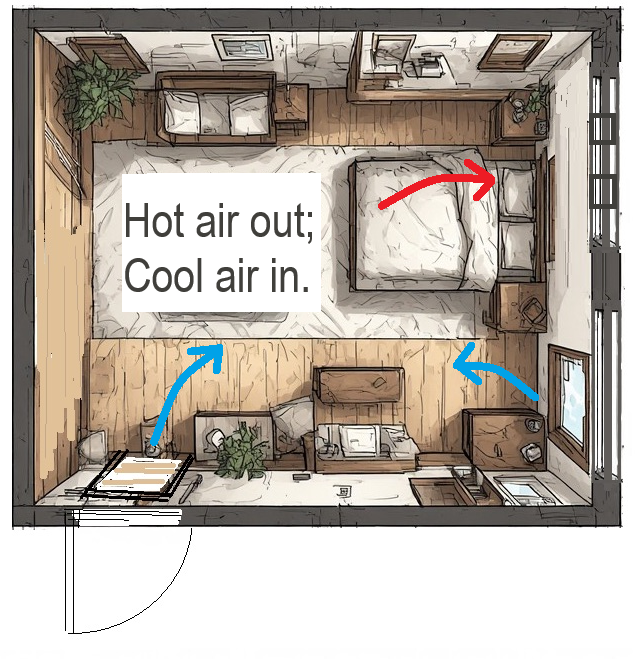
What’s wrong
- Cool air enters low
- Hot air exits high
- Natural convection assists airflow
Where to use this
- Bedrooms
- Stairwells
- Bathrooms
- Living rooms with high ceilings
This is how traditional Caribbean houses stay cool.
5. BAD WINDOW LAYOUT
❌ Big Glass + No Shade
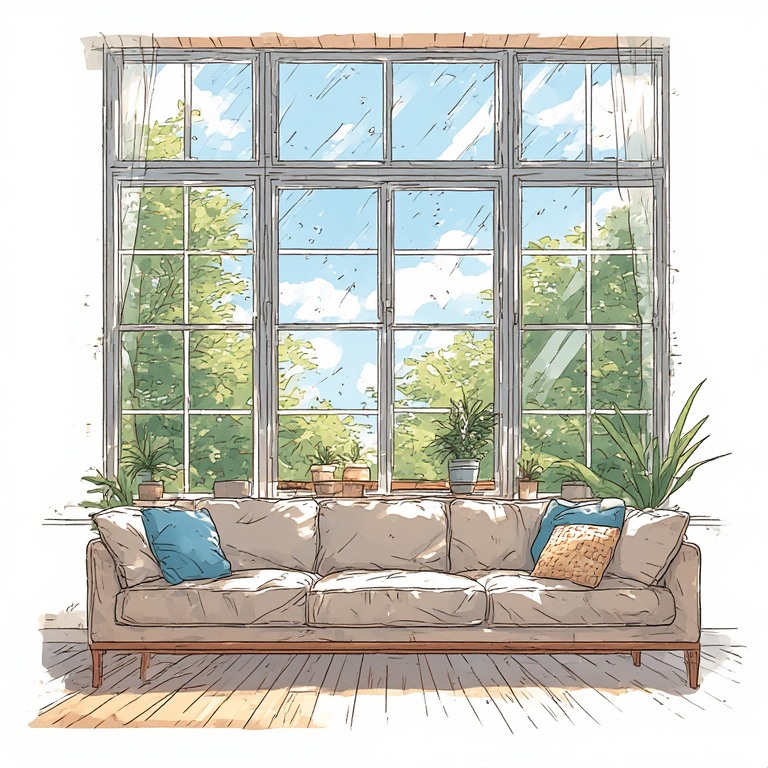
What’s wrong
- Glass faces sun directly
- No verandah, no eaves
- Heat enters faster than air can remove it
Results
- Curtains permanently closed
- AC dependency
- Faded furniture and hot walls
6. Good Window Layout
✅ Shaded Openings

Why this works
- Shade blocks heat before it hits glass
- Windows stay open during rain
- Daylight without glare
Shade first, then size the window.
6. BAD WINDOW LAYOUT
❌ Fixed Glass Everywhere
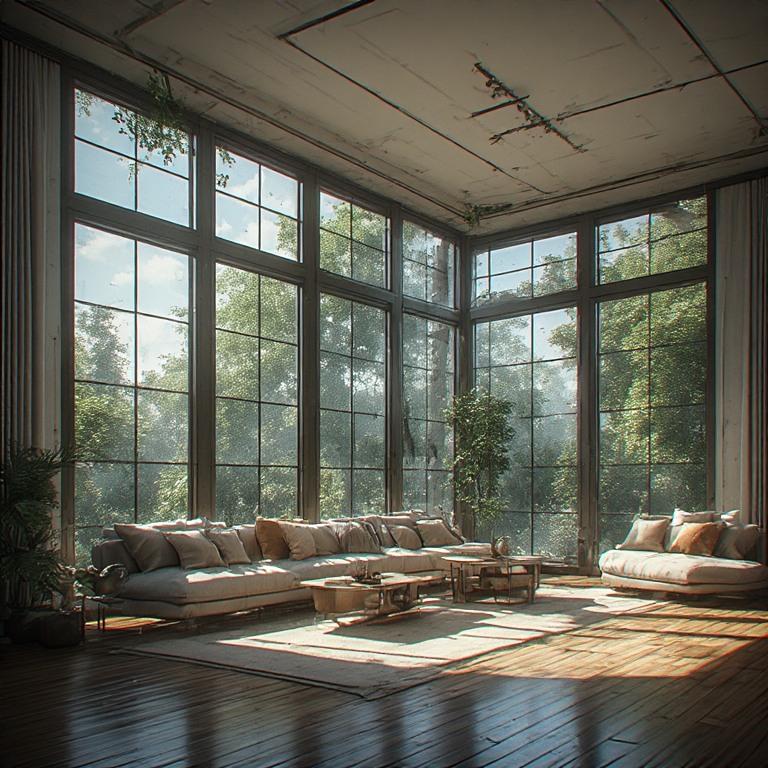
Problems
- No ventilation
- Internal pressure buildup during storms
- Heavy reliance on mechanical systems
8. GOOD WINDOW LAYOUT
✅ Operable Windows Where You Live
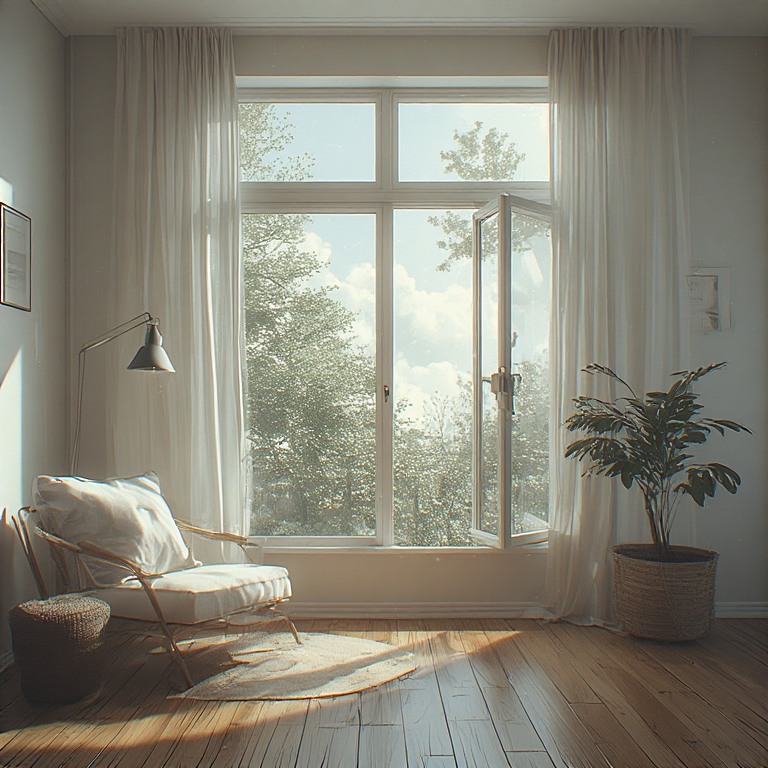
Best choices
- Louvers (jalousies) – rain-safe airflow
- Casements – wind-scooping
- Awnings – wet rooms
The 6 Golden Rules
- Every room needs air in and air out
- Windows on two sides beat bigger windows on one side
- High vents matter as much as low windows
- Shade glass externally, not with curtains
- Operable windows outperform fixed glass
- West-facing windows must be shaded aggressively
Summary
“Good window placement lets a house breathe; bad placement forces it to sweat.”
The placement of windows in a house is a crucial aspect of its overall design and functionality. Good window placement allows a house to breathe, promoting natural ventilation and ensuring that fresh air circulates throughout the living spaces. This not only enhances the comfort of the occupants but also contributes to better indoor air quality. In contrast, bad window placement can lead to a variety of issues; it can force a house to “sweat,” trapping humidity and heat inside. This can result in discomfort, increased energy costs, and even potential damage to the structure over time. Ultimately, the strategic positioning of windows is essential for creating a harmonious and efficient living environment.