

When it comes to maintaining an organized and efficient bathroom in tropical, humid environments, the challenge of storage becomes paramount. High humidity can lead to mold growth and material degradation, making it essential to select storage solutions that not only maximize space but also withstand the rigors of such climates over time. Whether you’re working with a compact area or a limited budget, there are numerous smart and practical options available that cater to both aesthetic appeal and functionality. From moisture-resistant materials to innovative designs that utilize vertical space, these strategies can transform a cluttered bathroom into a serene and well-ordered oasis. This article explores a variety of storage solutions tailored for small spaces, focusing on budget-friendly ideas that do not compromise on durability or style. By integrating these practical tips and tricks, you can create a bathroom that is not only organized but also resilient against the challenges posed by tropical weather conditions, ensuring that your space remains both functional and inviting for years to come. Embrace these storage strategies to enhance your bathroom experience, allowing for easy access to essentials while maintaining a refreshing and clutter-free environment..
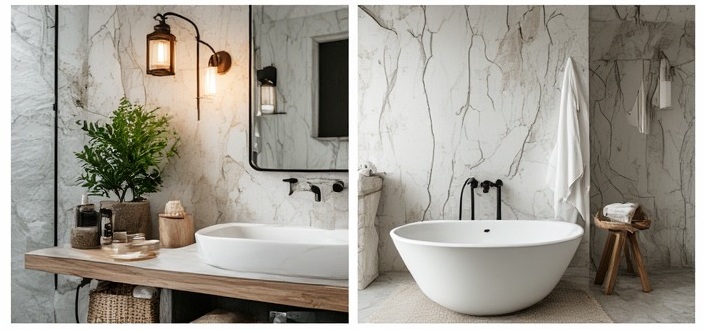
Smart Storage Options in the Bathroom
1. Vertical Wall Storage (highest impact, lowest footprint)
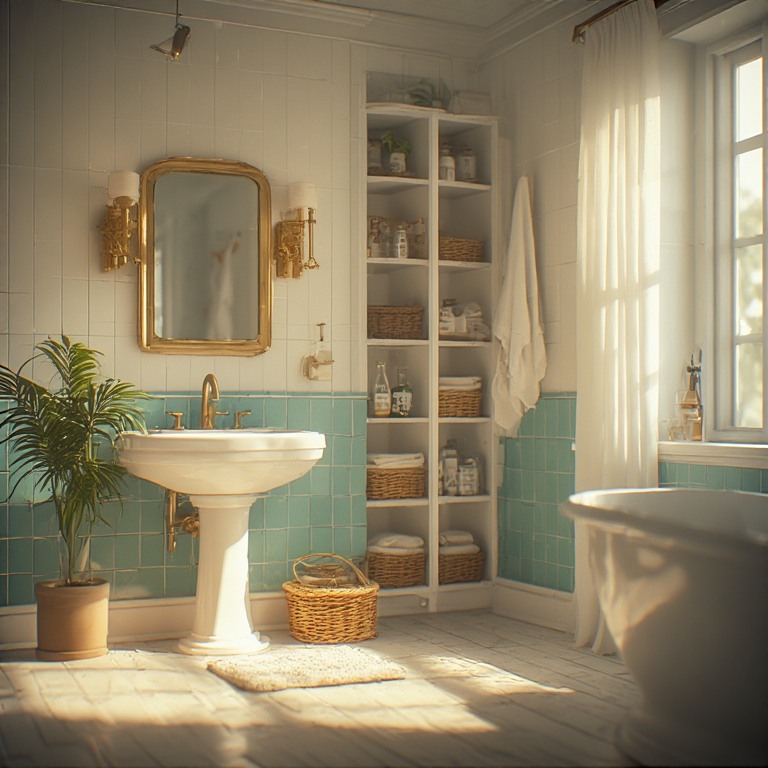
Why it works:
Bathrooms are usually short on floor space but have unused wall height.
Smart options:
- Floating shelves above the toilet or near the vanity
- Slim wall cabinets (150–300 mm deep)
- Open shelves for towels + closed cabinets for toiletries
Tropical tip:
Choose PVC, marine plywood, or powder-coated metal. Avoid raw MDF.
2. Mirror Storage (dual-purpose & clutter-reducing)
Why it works:
You already need a mirror—this doubles its value.
Smart options:
- Mirror cabinet with shallow shelves
- Recessed mirror cabinet (if wall depth allows)
- Internal dividers for medicine, grooming tools, skincare
Best for: small bathrooms, shared bathrooms, minimalist designs
3. Under-Sink Storage (fix the most wasted space)
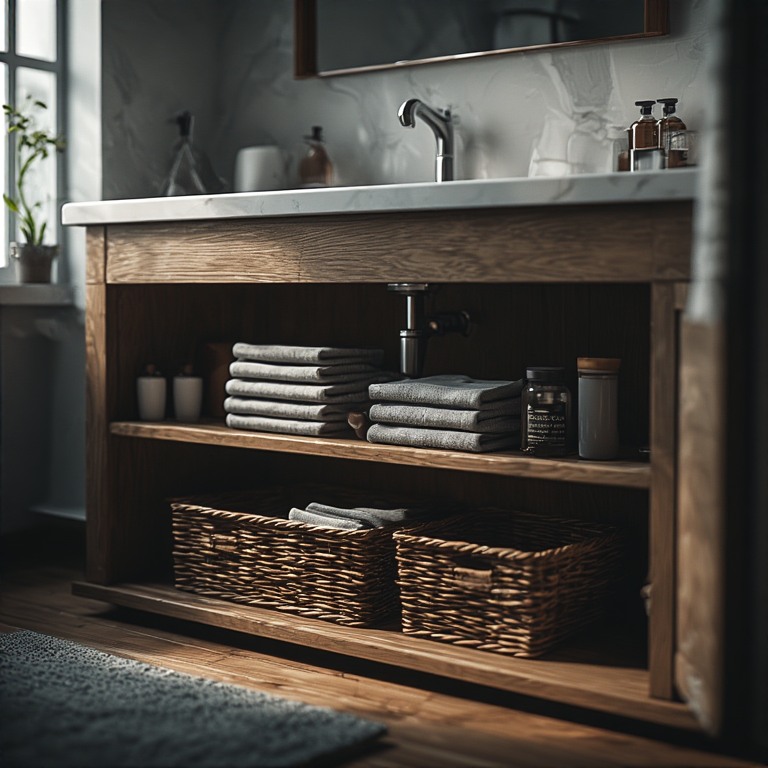
Why it works:
This area is often chaotic or underused.
Smart options:
- U-shaped drawers that wrap around plumbing
- Pull-out baskets or trays
- Water-resistant drawer organizers
Tropical tip:
Line the cabinet base with a plastic tray or vinyl sheet to protect against leaks.
4. Shower & Wet-Zone Storage (must survive constant moisture)
Why it works:
Keeps bottles off the floor and reduces clutter.
Smart options:
- Built-in shower niches (best long-term solution)
- Corner shelves (stainless steel or solid surface)
- Tension pole organizers (budget-friendly)
Avoid: suction cups in humid climates—they fail quickly.
5. Over-Toilet Storage (free real estate)
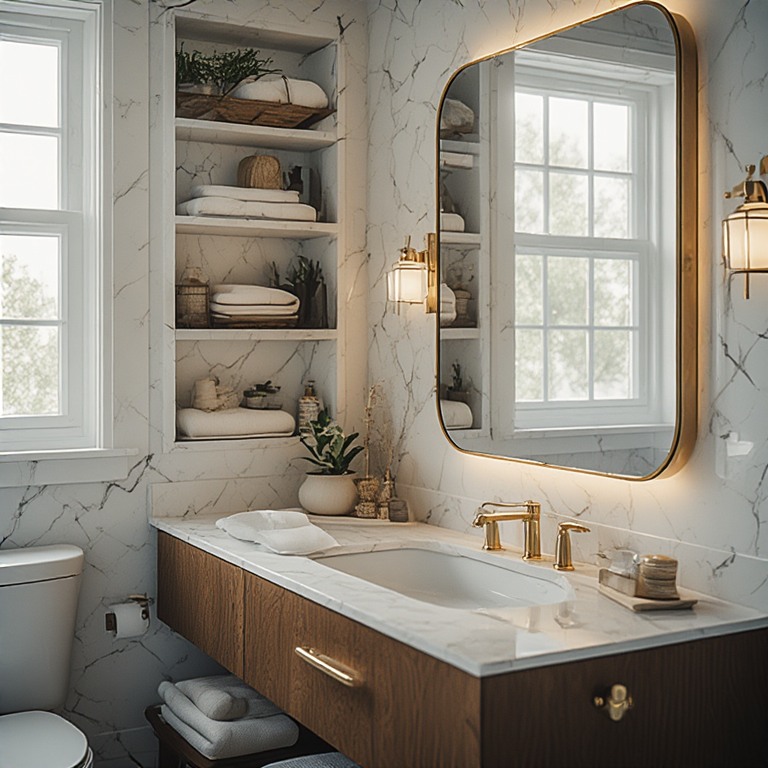
Why it works:
Uses space that almost always goes unused.
Smart options:
- Open shelves for towels and baskets
- Narrow cabinet for paper goods and cleaners
- Ladder-style shelves (modern + airy)
6. Hidden & Slim Storage (for very small bathrooms)
Smart ideas:
- Behind-the-door racks
- Slim rolling cabinets (100–150 mm wide)
- Recessed wall niches outside the shower
These work especially well in apartments or older homes.
7. Material Choices That Matter in the Tropics
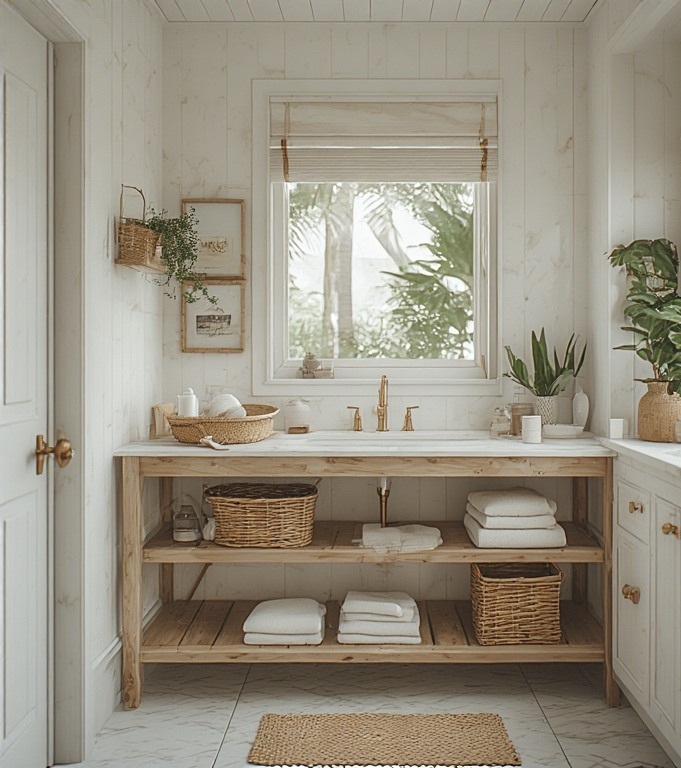
Best materials:
- PVC / plastic composites
- Marine or exterior-grade plywood (sealed)
- Stainless steel (304 or 316)
- Powder-coated aluminum
Avoid long-term:
- Raw MDF
- Particle board
- Untreated wood
- Cheap chrome-plated steel
Low-Income vs Middle-Income Smart Picks
Low-income (maximum function, minimal spend)
- Open wall shelves
- Over-toilet shelving
- Plastic or PVC mirror cabinet
- Tension-pole shower organizer
- Stackable baskets
Middle-income (cleaner look, less maintenance)
- Recessed mirror cabinet
- Built-in shower niche
- Drawer-based vanity storage
- Wall-mounted vanity (easier cleaning + airflow)
- Slim tall cabinet for towels/linen
One Design Rule That Changes Everything
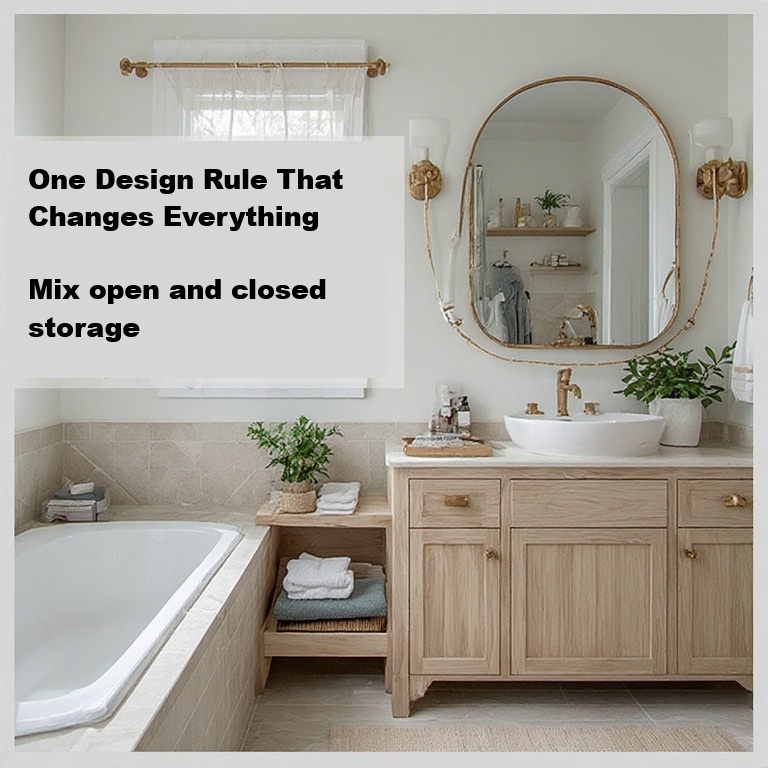
Mix open + closed storage
- Open → towels, daily items
- Closed → toiletries, cleaners, backups
This keeps the bathroom feeling calm instead of cluttered.
LATEST ARTICLES
-

10 Ideas designed for a Caribbean Tropical Home
These ideas are designed for a Caribbean tropical home, where the emphasis is on natural materials, breezy spaces, vibrant foliage, and seasonal changes that fit the local climate rather than four distinct temperate seasons. 1. Tropical Spring Refresh To create a refreshing ambiance in a Caribbean tropical home, the concept of a “Tropical Spring Refresh”…
-

How to Make Your Own Bubble Diagram
A bubble diagram in architecture is a quick, loose way of planning how spaces relate to each other before you start drawing walls, doors, or exact dimensions. Think of it as the logic underneath the floor plan. Instead of drawing a bedroom as a precise 12′ × 14′ rectangle, you draw a bubble labelled Bedroom.…
-
Remedies for Slopes, Corners & Sharp Angles
In the realms of architecture and feng shui, a significant overlap exists in their fundamental principles, despite the different terminologies used. Feng shui emphasizes the concept of “chi,” which refers to the vital energy that flows through spaces, affecting the well-being of individuals. Architects, on the other hand, focus on aspects such as circulation, sight…