

Mulch is one of the simplest, most powerful tools in gardening — especially in the Caribbean — because it keeps soil cool, reduces weeds, enriches the ground, and helps hold moisture during dry spells.
Here’s how mulch is made, broken down into clear, practical steps and local options.
What Is Mulch Made From?
Mulch is simply organic material that has been shredded or broken down into pieces.
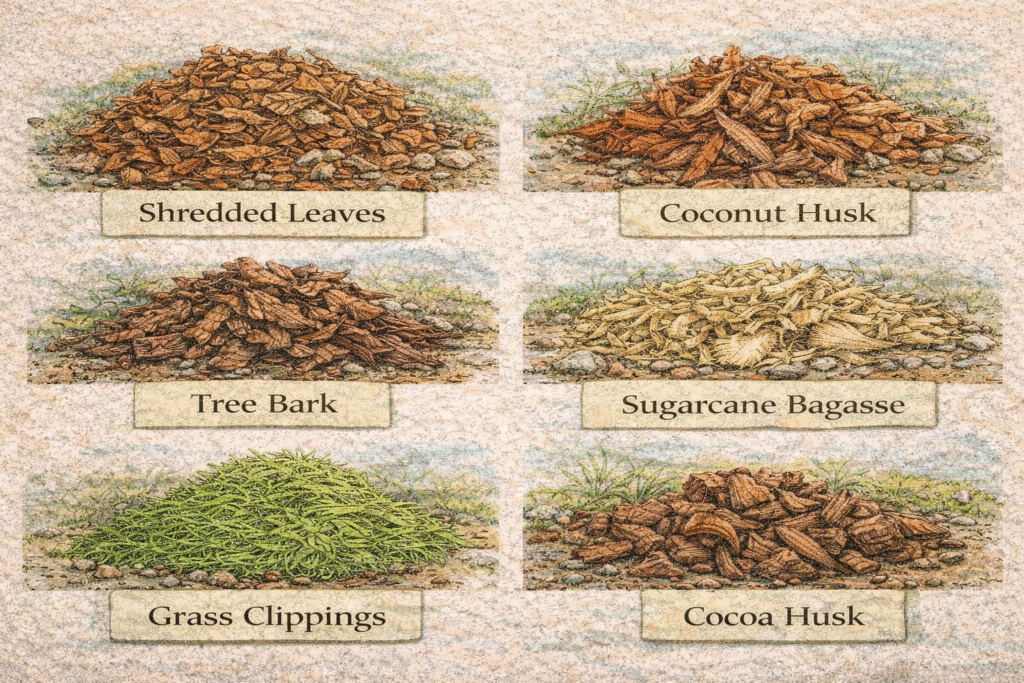
Common Caribbean mulch materials include:
- Dry leaves (especially mango, almond, poui)
- Coconut husk / coir
- Shredded bark
- Tree trimmings / chipped branches
- Grass clippings
- Sugarcane bagasse
- Bamboo shavings
- Cocoa husk (excellent and fragrant!)
- Sawdust (aged, never fresh)
- Compost in rough form
Some people also use stone mulch (pebbles) in hot areas — but that doesn’t enrich soil.
How Mulch Is Made
Here are the steps to creating your own garden mulch.
✔ Step 1: Gather Organic Material
Collect natural items from your yard:
- Fallen leaves
- Small branches
- Coconut shells or husk fibers
- Grass clippings (let dry first)
- Bamboo leaves
- Pruned plants
Avoid plants that are diseased or have seeds that may spread.
✔ Step 2: Shred or Break the Material
The more finely shredded the material, the better it performs.
Ways to shred:
- Use a chip-per shredder (ideal for branches + twigs)
- Run a lawn mower over dry leaves
- Manually tear coconut husk
- Use pruning shears for small sticks
Goal: Create small pieces that break down slowly but evenly.
✔ Step 3: Dry the Material (Important in the Caribbean!)
Spread materials out in the sun for a day or two.
Why?
- Prevents mold
- Stops pests from nesting
- Makes mulch last longer
- Reduces the “fresh grass smell” problem
Dry mulch is lighter and easier to spread.
✔ Step 4: Combine Different Materials (Optional)
Blending materials produces better mulch.
Example Caribbean mix:
- 50% shredded leaves
- 25% coconut husk or bark
- 25% grass clippings (dried)
This mix is long-lasting and nutrient-rich.
✔ Step 5: Apply Mulch to Beds
Spread mulch 2–3 inches thick on:
- Flower beds
- Groundcovers
- Trees
- Vegetable gardens
- Walkway edges
Avoid piling mulch directly against the stems or trunks — it causes rot.
Special Caribbean Mulch Options
Coconut Husk / Coir
- Excellent at holding moisture
- Resists rot
- Perfect for hot, dry areas
Cocoa Husk
- Smells amazing
- Repels some pests
- Adds rich organic matter
Shredded Bamboo
- Very fast-growing; great sustainable resource
- Makes attractive mulch
Almond Tree Leaves
Break down slowly and provide superb soil improvement.
Why Mulch Is Essential in the Caribbean
In regions where the climate exhibits significant fluctuations between heavy rainfall and prolonged dry spells, the application of mulch serves as a vital protective measure for soil health and plant vitality. During intense storms, mulch acts as a barrier that safeguards the underlying soil from erosion, a common issue where heavy downpours can wash away topsoil and crucial nutrients. Furthermore, mulch plays a critical role in temperature regulation; it helps maintain a cooler soil temperature during scorching summer days, creating a more stable environment for root systems. This temperature moderation is essential for plant health, as extreme heat can stress plants and hinder their growth.
In addition to these protective functions, mulch offers several agronomic benefits that contribute to the overall sustainability of gardening and landscaping practices. By suppressing weed growth, mulch reduces competition for resources such as water and nutrients, allowing plants to thrive without the added burden of invasive species. Moreover, mulch serves as a moisture retainer, helping to keep the soil hydrated for days longer than it would be without this layer of organic matter. Lastly, as mulch decomposes, it provides a slow-release source of nutrients, enriching the soil and promoting healthy plant growth over time. In essence, mulch can be viewed as a form of insurance for your plants, fostering an environment where they can flourish despite the challenges posed by varying climatic conditions.
What NOT to Use as Mulch
Avoid:
- Fresh grass clippings (they rot and stink)
- Diseased plant material
- Wood chips treated with chemicals
- Pine needles (acidic and not ideal in T&T)
- Very thick layers (over 3 inches) — restricts oxygen