

In the Caribbean (or any warm, naturally lit setting), a well-designed bedroom layout balances comfort, ventilation, privacy, and energy flow — blending practical furniture placement with emotional calm and feng shui awareness.
Let’s break it down into clear, useful guidance 👇
1. The Goal of Bedroom Layout Design
Your bedroom should:
- Encourage restful sleep and relaxation
- Allow easy movement and natural airflow
- Maintain visual calm and emotional balance
- Reflect your personal style without clutter
The golden rule: the bed dictates everything — it’s both the focal point and energy anchor of the room.
2. Ideal Bedroom Layout (Universal Logic)
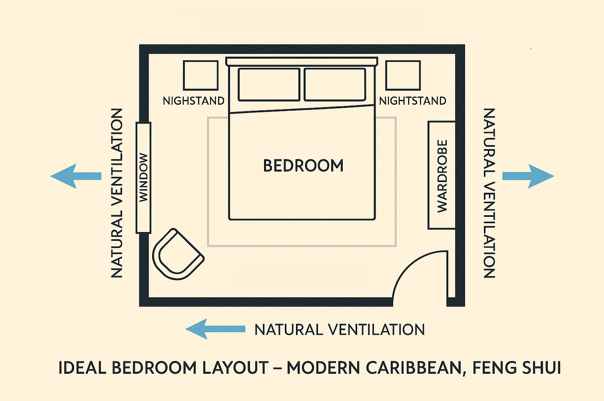
Here’s a general blueprint you can adapt for Caribbean-style homes:
A. Bed Placement — “The Command Position”
- Place the headboard against a solid wall, not under a window or floating in the room.
- The bed should face the main door but not be directly in line with it.
- Leave open space on both sides (at least 2 feet) for balance and movement.
- Avoid placing the foot of the bed directly facing the door — this is known as the “coffin position” in feng shui and can create restless energy.
💡 Best wall: The one opposite or diagonally across from the door — ideally with gentle cross-breezes and no harsh sunlight directly overhead.
B. Nightstands and Lighting
- Include a nightstand on each side for symmetry and grounding energy (yin/yang balance).
- Use soft, warm bedside lighting (lamps or sconces) instead of harsh overhead lights.
- Keep cords tidy and surfaces uncluttered — clutter near the bed = mental clutter.
C. Wardrobe or Closet Placement
- Position wardrobes or dressers along side walls, not directly facing the bed.
- In small rooms, built-in wardrobes save space and allow better air circulation.
- Avoid mirrors that reflect the bed — they can cause energetic restlessness (in feng shui).
💡 Tip: If you must have mirrored wardrobes, use soft curtains or frosted panels.
D. Windows, Breezes, and Ventilation
Caribbean bedrooms benefit from cross-ventilation:
- Align the bed perpendicular to airflow from windows or louvered vents.
- Avoid having the bed directly in front of windows — wind and light fluctuations disturb sleep.
- Use light curtains or blinds that let in air but filter sunlight.
🌬️ Good airflow = deeper sleep and less humidity.
E. Seating and Personal Areas
If space allows:
- Add a small armchair, bench, or daybed near a window for reading or reflection.
- Keep this separate from the main walking path.
- A rug under the seating defines it and adds softness.
F. Flow and Movement
Ensure:
- Clear pathways between door, bed, and bathroom.
- No obstacles near corners or around the bed.
- Bedroom furniture follows a balanced “triangle” — bed, wardrobe, and window in harmony, with space between each.
📏 General clearances:
- 2–3 ft between furniture pieces
- 3 ft walkway from door to bed
3. Tropical Caribbean Bedroom Enhancements
To keep things airy, cool, and harmonious:
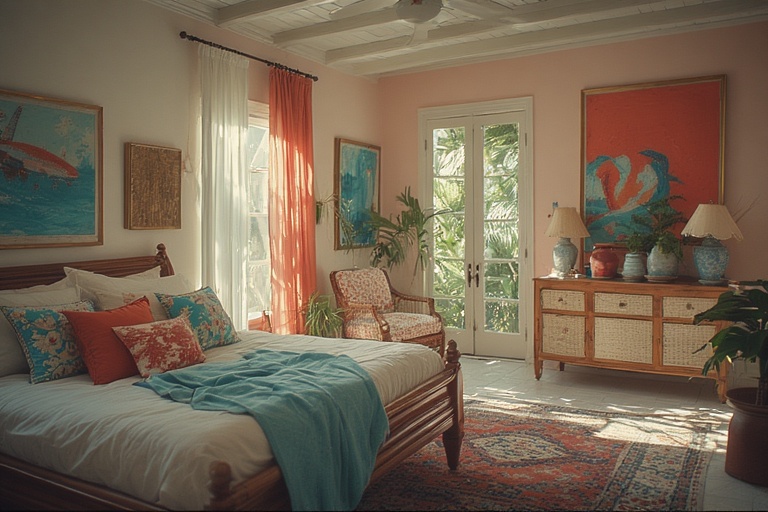
- Choose light colors (white, sand, aqua, pale green) for walls and bedding.
- Use wood, rattan, or bamboo furniture — breathable and organic.
- Add ceiling fans or high vents for air circulation.
- Integrate plants like peace lilies or palms for freshness (but avoid crowding near the bed).
- Include cross-breeze windows or louvered shutters instead of heavy drapes.
🌞 A bright morning bedroom feels like waking up to nature — keep the connection visible.
4. Feng Shui Principles for Bedroom Layout
| Aspect | Guideline |
|---|---|
| Bed direction | Ideally head points south, east, or southeast — aligns with vitality and peace. |
| Mirrors | Avoid facing the bed directly (causes “double energy”). |
| Water features | Avoid in bedrooms — water represents active energy. |
| Lighting | Soft, warm, layered — avoid harsh ceiling light directly over the bed. |
| Electronics | Keep minimal — TVs and phones disrupt rest and Chi. |
| Décor | Use artwork with calm scenes (ocean, sky, nature). Avoid chaotic or abstract art near bed. |
💫 Think serenity: every item should support peace, not stimulation.
5. Sample Room Layout Ideas
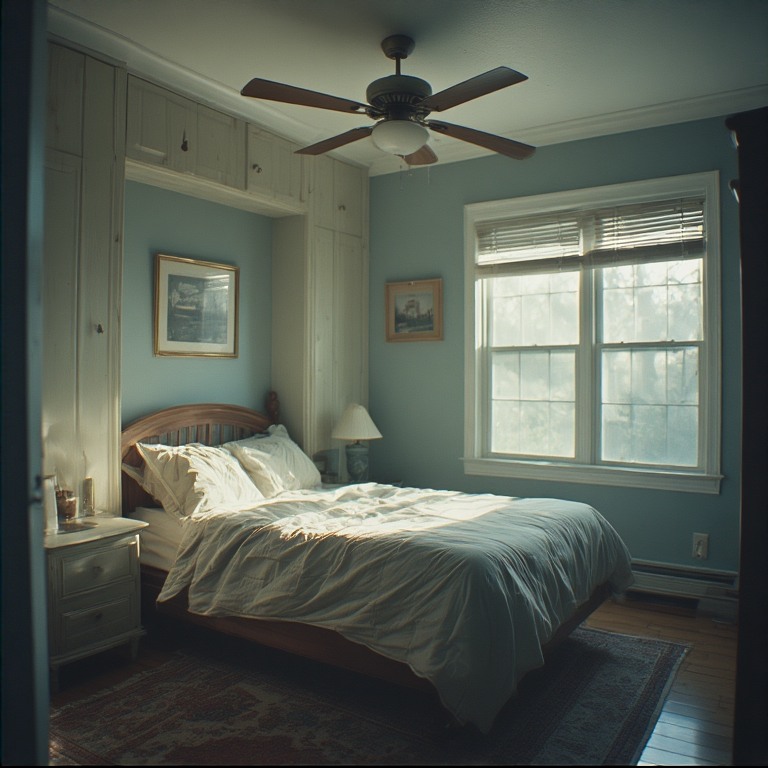
Small Bedroom (100–120 sq. ft.):
- Bed centered on main wall
- Two small nightstands
- Built-in wardrobe opposite bed
- Single window with louvered ventilation
- Ceiling fan above center line of bed
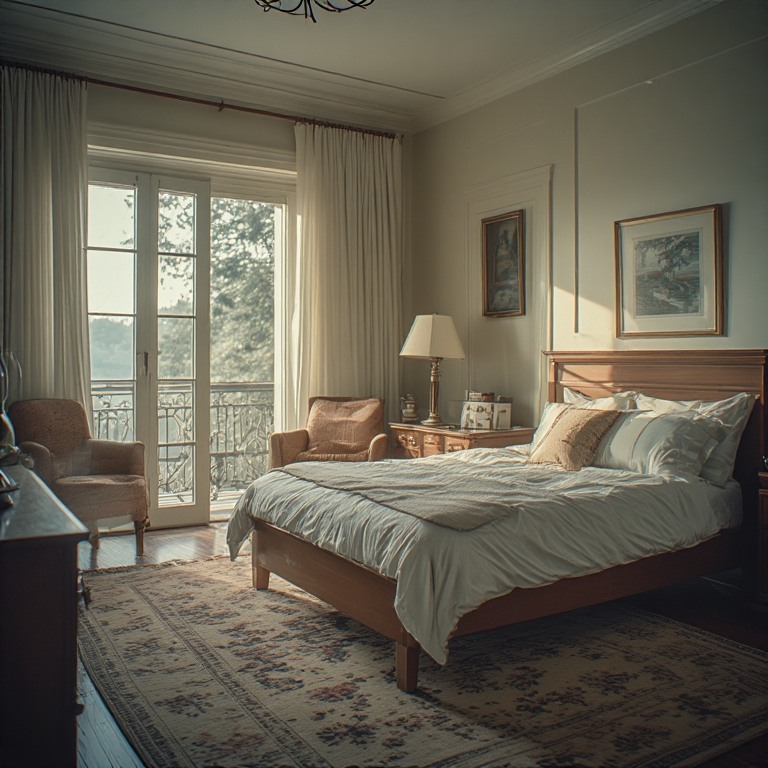
Medium Bedroom (130–160 sq. ft.):
- Bed in command position (facing entry)
- Side tables + reading chair near window
- Wardrobe along one wall, away from door path
- Optional balcony or veranda access
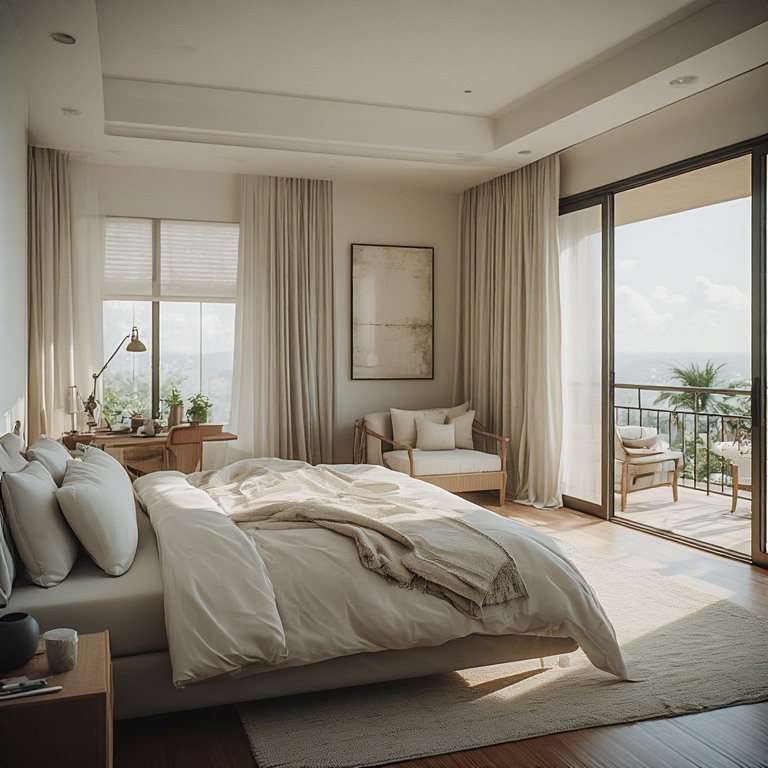
Large Master Bedroom (180–220 sq. ft.):
- Bed centrally placed with open sides
- Separate seating zone or writing desk
- Ensuite bathroom entrance discreetly off to the side
- Balcony doors aligned for morning breeze but shaded
6. In Summary: Best Furniture Placement Rules
✅ Do:
- Center the bed on a solid wall
- Keep equal space on both sides
- Use symmetry for balance
- Maximize airflow and light
- Keep décor soothing
❌ Avoid:
- Bed directly under a window or facing the door
- Too much furniture (blocks energy)
- Mirrors reflecting the bed
- Harsh lighting or dark corners